You have no items in your shopping cart.
Blog / Strawberries Grown Indoors in Singapore: Inside Today's Hydroponics Class
Strawberries Grown Indoors in Singapore: Inside Today's Hydroponics Class
Strawberries want a cool climate and a winter chill. Singapore sits one degree off the equator and has neither. For most of the country's history, a strawberry here has been something that arrived on a plane.
Today our WSQ - Basic Urban Farming with Hydroponics class stood in front of several thousand of them, growing indoors, in Singapore.
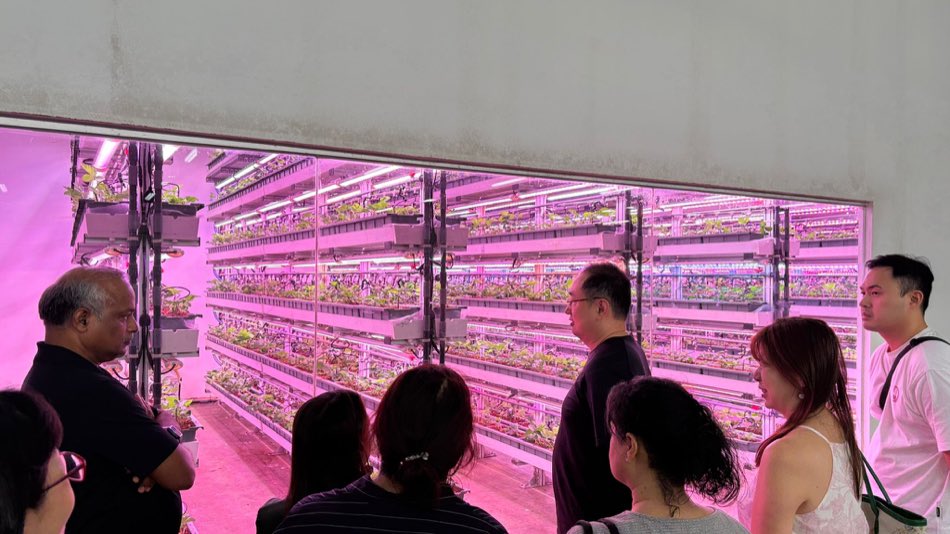
The class of 29 August 2026 was led by Dr Samita at MEOD Farm, and this is what the day covered.
Why strawberries are the hard case
Leafy greens are the easy win in hydroponics — fast, shallow-rooted, forgiving. Strawberries are the opposite, and that is exactly why growing them well is such a good demonstration of what controlled-environment agriculture can do.
A strawberry plant asks for things Singapore's outdoor climate cannot provide:
- Cool temperatures. Strawberries are a temperate crop. Sustained tropical heat pushes them into stress rather than fruiting.
- A controlled day length. Flowering in many varieties responds to how long the light lasts, and equatorial days are close to twelve hours year-round with no seasonal swing.
- Low humidity around the fruit. Warm, humid air is ideal for the fungal diseases that ruin soft fruit.
- Pollination. Indoors there is no wind and there are no insects, so fruit set is something a grower has to arrange.
Grow them in a sealed indoor environment and every one of those becomes a setting rather than a constraint. That is the whole argument for this kind of farming, made in the most demanding way available.
Inside the growing room
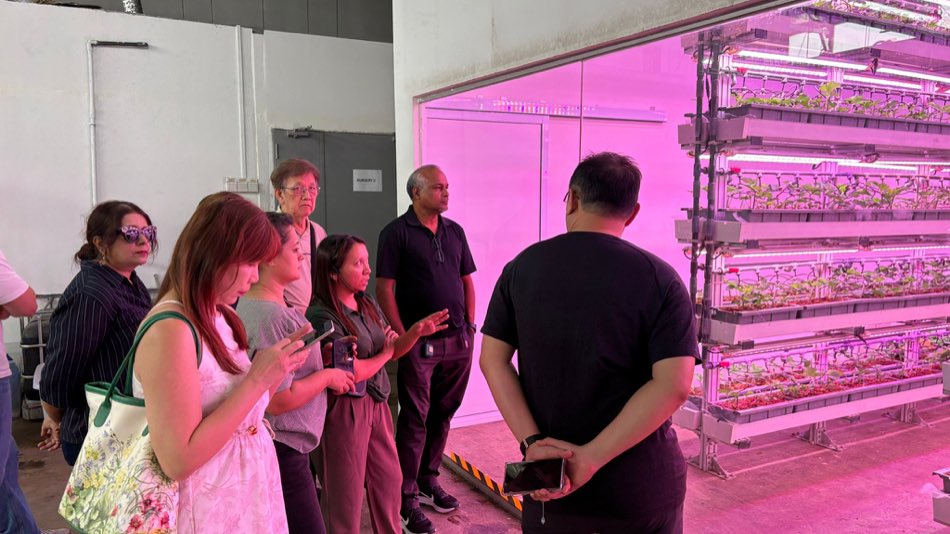
Look at how the racks are built. Each tier carries its own LED bar, because in a stacked system the shelf above is the sky for the shelf below — there is no sunlight reaching down through five levels. Every layer has to be lit independently, and that is what makes vertical farming an electricity business as much as an agriculture one.
The light is pink for the same reason grow lights always are: chlorophyll absorbs strongly in the red and blue bands and reflects most green. A lamp built to emit mainly red and blue delivers what the plant uses and skips paying for what it reflects away.
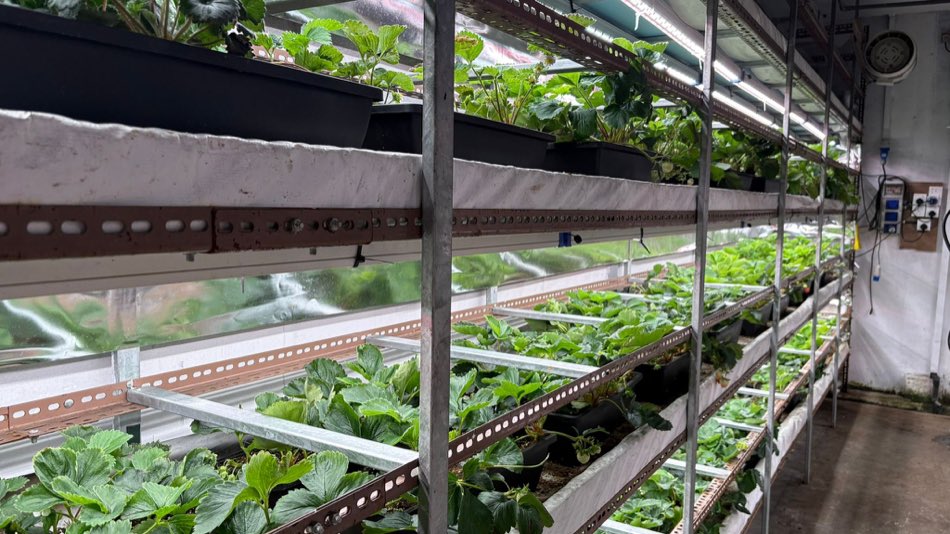
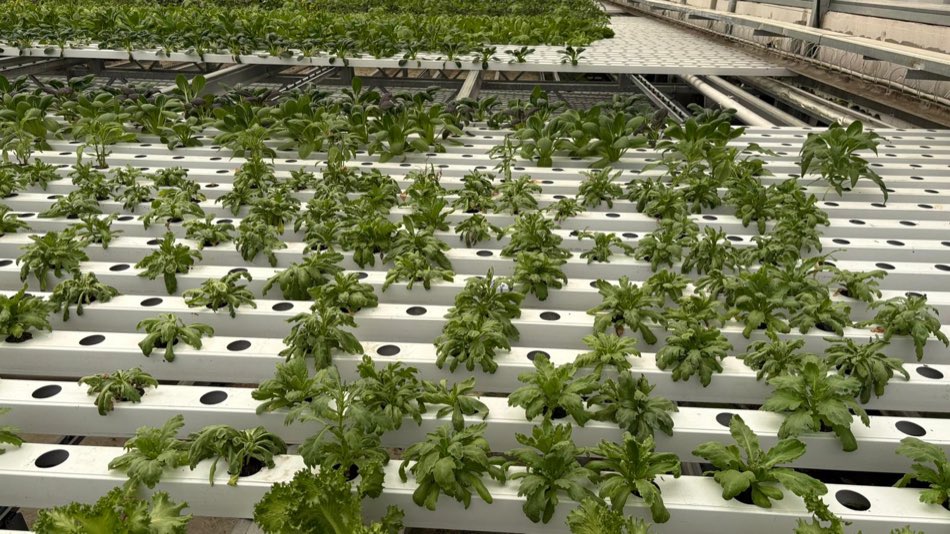
The greens matter commercially even when the strawberries get the attention. They are fast, reliable and sell continuously, which is what funds the harder, slower, higher-value crop growing in the next room.
It all starts in the nursery
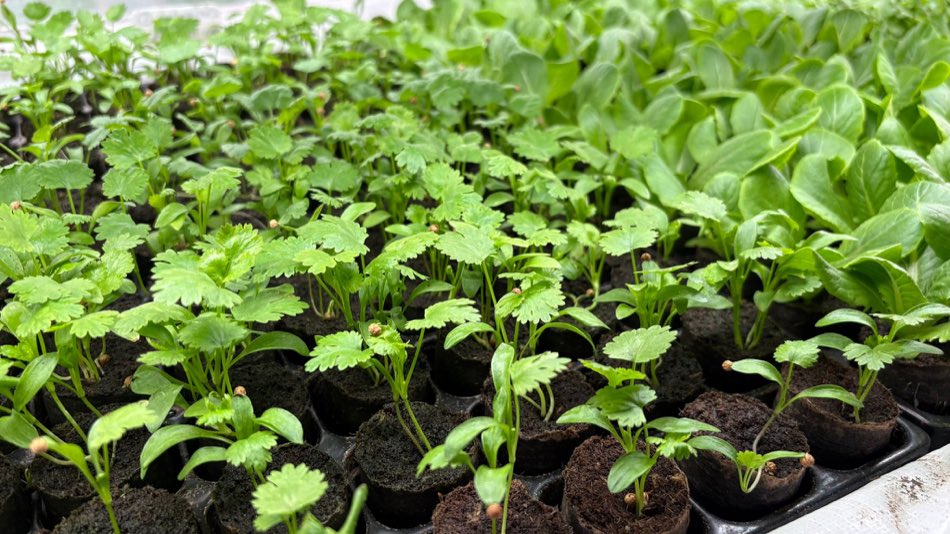
Whatever the crop, the sequence is identical: germinate in a plug, grow on in the nursery, transplant into the production system. A farm seeds in staggered batches so the growing rooms fill continuously and the harvest never stops — the scheduling discipline that separates supplying food from merely growing it.
What indoor strawberries actually require
Strip out the novelty and the requirements are a checklist any serious grower will recognise:
- Temperature control, which in Singapore means active cooling and the energy bill that comes with it.
- A light recipe and a schedule — intensity, spectrum and day length, held consistent by a timer rather than by memory.
- Humidity and airflow management, because soft fruit in warm, still, humid air is an invitation to fungal disease.
- Hand or assisted pollination, since nothing indoors will do it for you.
- A nutrient recipe that shifts by stage, from leafy growth into flowering and fruiting.
- Measurement, constantly. pH and EC still decide whether the plant can use what is in the tank, exactly as they do in a jam jar.
That last point is the thread running through the whole course. A vertical farm is a tabletop hydroponics kit with better engineering and stricter bookkeeping. The physics does not change with scale.
Today's class
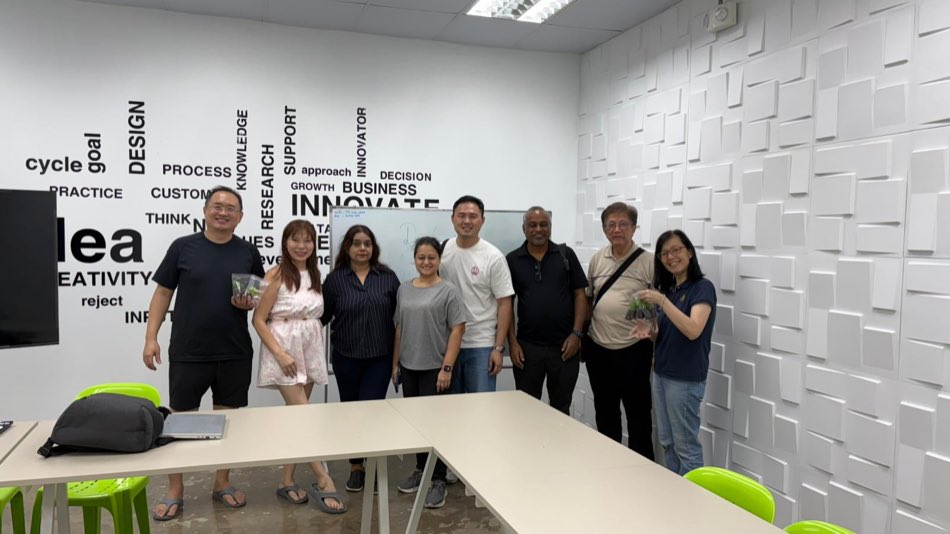
Everyone left with seedlings and a system they had put together themselves. That is the point of the day: you cannot run a vertical farm after eight hours, but you can leave understanding exactly what one is doing and why — and with something growing on your own windowsill to practise on.
The course
WSQ - Basic Urban Farming with Hydroponics (course code TGS-2025053916) is a 1-day, 8-hour class at Beginner level with a 1-hour assessment, held at MEOD Farm, 13 Neo Tiew Harvest Lane. It maps to the SkillsFuture Skills Framework TSC Urban Farming Implementation and Management Control (AGR-FOP-2002-1.1), with two learning outcomes:
- Perform farming activities and equipment operations according to standard operating procedures
- Execute farming operations work in accordance with regulations, WSH practices and housekeeping rules
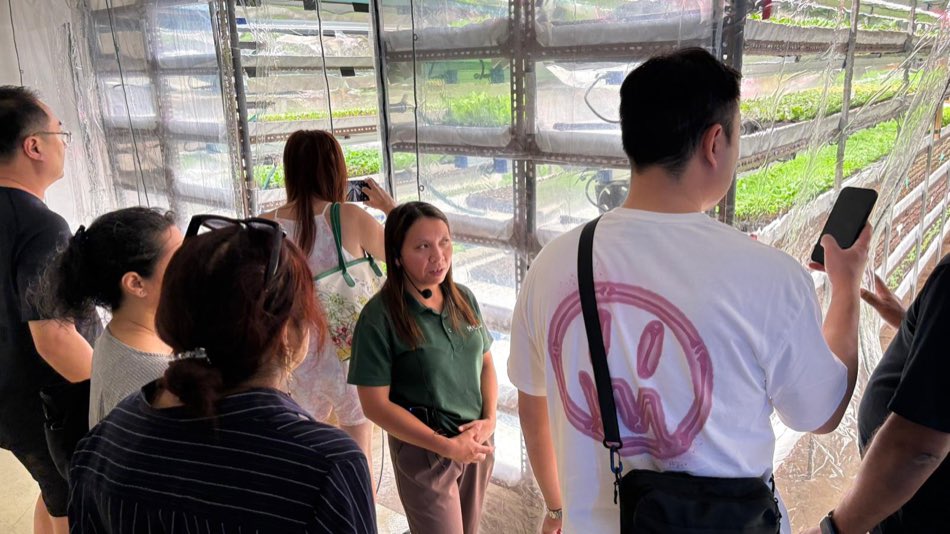
The day covers hydroponic system types (deep water culture, nutrient film technique, wick, ebb and flow, drip), growing media, plant nutrition and nutrient solutions, pH and EC monitoring, indoor farming conditions including lighting, temperature and humidity control, Singapore's urban farming regulations, good agriculture practices and workplace safety — plus hands-on practice with a hydroponics kit and a guided tour of a commercial hydroponics farm.
What it costs
The full fee is $350 before GST. With WSQ funding:
| Who you are | Nett fee | Funding |
|---|---|---|
| Singapore Citizen / PR, aged 21 and above | $206.50 | 50% course-fee funding |
| Singapore Citizen aged 40 and above (MCES), or SME-sponsored | $136.50 | 70% course-fee funding |
GST of $31.50 (9%) applies to the full course fee. Funding is valid from 24 March 2025 to 23 March 2027. Eligible Singapore Citizens can apply SkillsFuture Credit and PSEA against the nett fee, NTUC members may claim UTAP, and employers can tap SFEC with Absentee Payroll support. Completion — at least 75% attendance plus a pass in the assessment — earns a Certificate of Achievement from Tertiary Infotech Academy and an OpenCert (Statement of Achievement) from SkillsFuture Singapore.
Check the next class date and funding eligibility →
Frequently asked questions
Can strawberries really be grown in Singapore?
Not outdoors in the open, but yes in a controlled indoor environment. Strawberries are a temperate crop that wants cool temperatures, a managed day length and low humidity around the fruit. Indoors under LEDs with active cooling, each of those becomes a setting you control rather than a climate you are stuck with.
Why is the light pink?
Because it combines red and blue diodes. Chlorophyll absorbs strongly in the red and blue bands and reflects most green, which is why leaves look green. A lamp emitting mainly red and blue gives the plant the wavelengths it uses without paying to produce light it reflects away.
How are indoor strawberries pollinated?
Not by wind or insects, because indoors there are neither. Fruit set has to be arranged by the grower, whether by hand, by air movement, or by introducing pollinators deliberately. It is one of the costs of a sealed environment that people rarely think about until they see the flowers.
Does the course teach me to grow strawberries?
The course teaches the foundations that any crop rests on — system types, growing media, nutrient solutions, pH and EC control, and indoor conditions including lighting, temperature and humidity. The strawberry farm is the guided-tour half of the day: it shows what those fundamentals look like at commercial scale and at the difficult end of the crop range.
What should a beginner grow first?
Leafy greens and herbs — lettuce, bok choy, kailan, basil. They are fast and forgiving, so you complete several crop cycles, and several mistakes, in the time a single fruiting crop would take. Work up to fruit once you can hold a stable pH and EC through a full cycle.
Is this course funded?
Yes. WSQ funding brings the $350 fee to $206.50 for Singapore Citizens and PRs aged 21 and above, or $136.50 for Singapore Citizens aged 40 and above under MCES. SkillsFuture Credit, PSEA and UTAP can be applied on top. Funding runs from 24 March 2025 to 23 March 2027.
Where to go next
A strawberry growing a degree off the equator is a good reminder of what this technology actually removes: the assumption that where you are decides what you can grow.
- Start with leafy greens on a shelf and get through one complete crop cycle.
- Join the next WSQ - Basic Urban Farming with Hydroponics class — from $136.50 nett for eligible Singapore Citizens aged 40 and above — and see the strawberry farm for yourself.
- Keep a log of pH, EC and light hours. Every serious grower you meet keeps one.
More from this course: why grow lights are pink, hydroponics in a jam jar, building a deep water culture kit, growing melons hydroponically, and how hydroponics works.