You have no items in your shopping cart.

Blog / Germination, Step by Step: Our 8 October 2016 Hydroponics Class
Germination, Step by Step: Our 8 October 2016 Hydroponics Class
Ask why a first hydroponic attempt failed and the answer is rarely about pumps or nutrient recipes. It is almost always that the seeds never got going properly — patchy germination, seedlings that stalled at two leaves, a tray where half the sites came up and half did not.
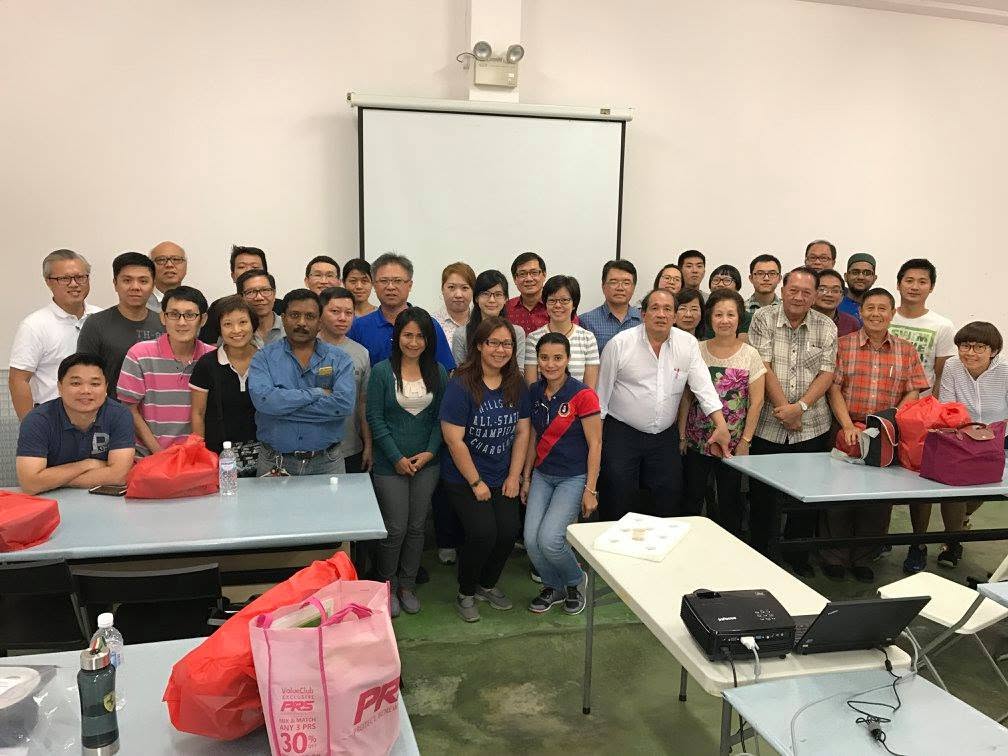
Our class on 8 October 2016 at Toh Orchid Farm, taught by Geoffrey Chow, gave that first fortnight the attention it deserves.
The lesson on the screen
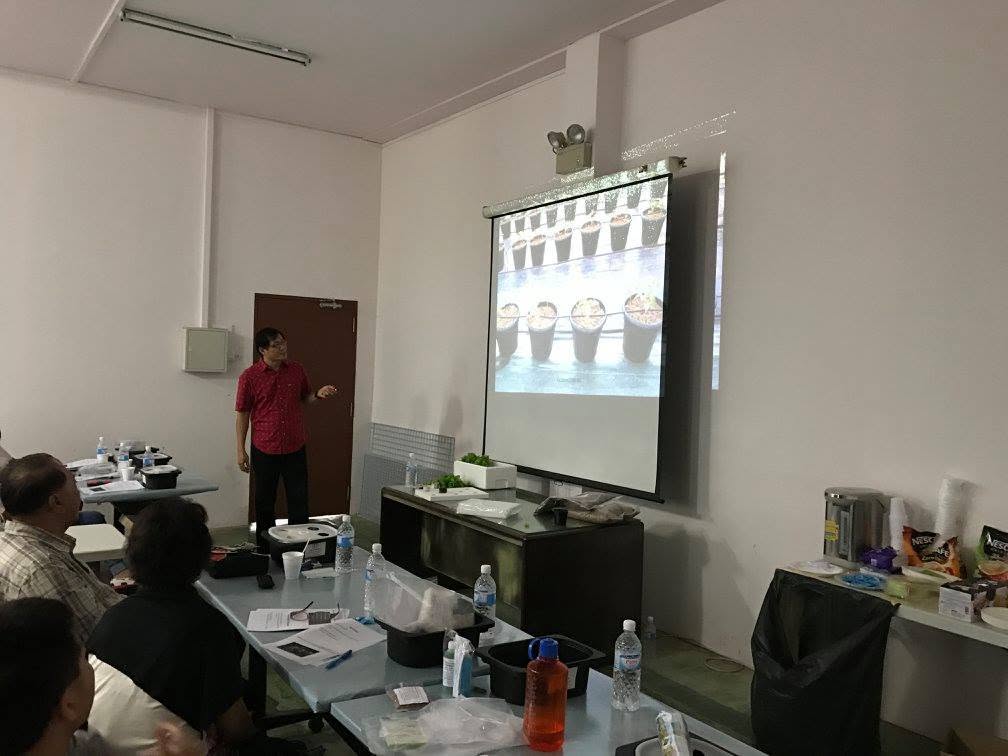
Look at what is projected: a row of pots showing seedlings at successive stages. Not a diagram — a photograph of real trays, so the class could see what healthy progress looks like day by day.
That matters more than it sounds. The commonest beginner mistake is not a technical error at all; it is impatience. Someone sees nothing on day three, decides the nutrients are wrong, doubles the strength, and burns the seedlings that were about to emerge. Knowing what day three is supposed to look like prevents an entire category of self-inflicted failure.
Everyone gets a system
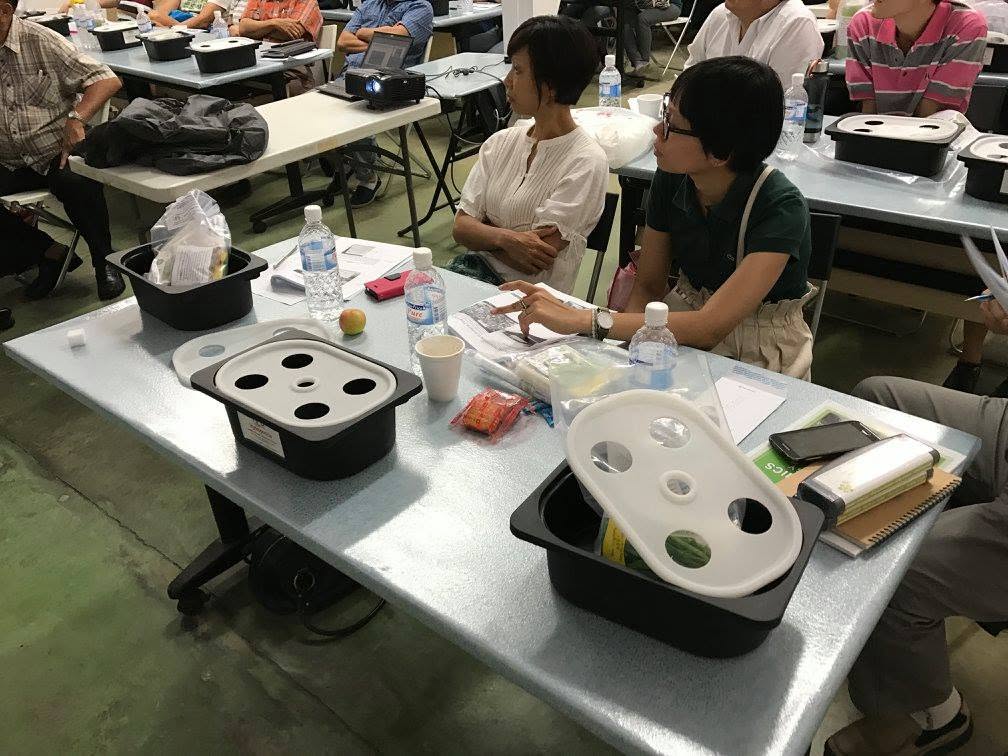
Look closely at the two lids: one has four planting holes, the other six. That is not an accident of supply, it is a teaching point about spacing.
Six sites in the same tub means more plants and less room for each. For fast, small leafy greens that is fine. For anything that fills out, the four-hole lid gives each plant the air circulation it needs, and crowded leaves that trap humidity between them are an invitation to disease. Choosing the lid is choosing the crop — before a single seed is sown.
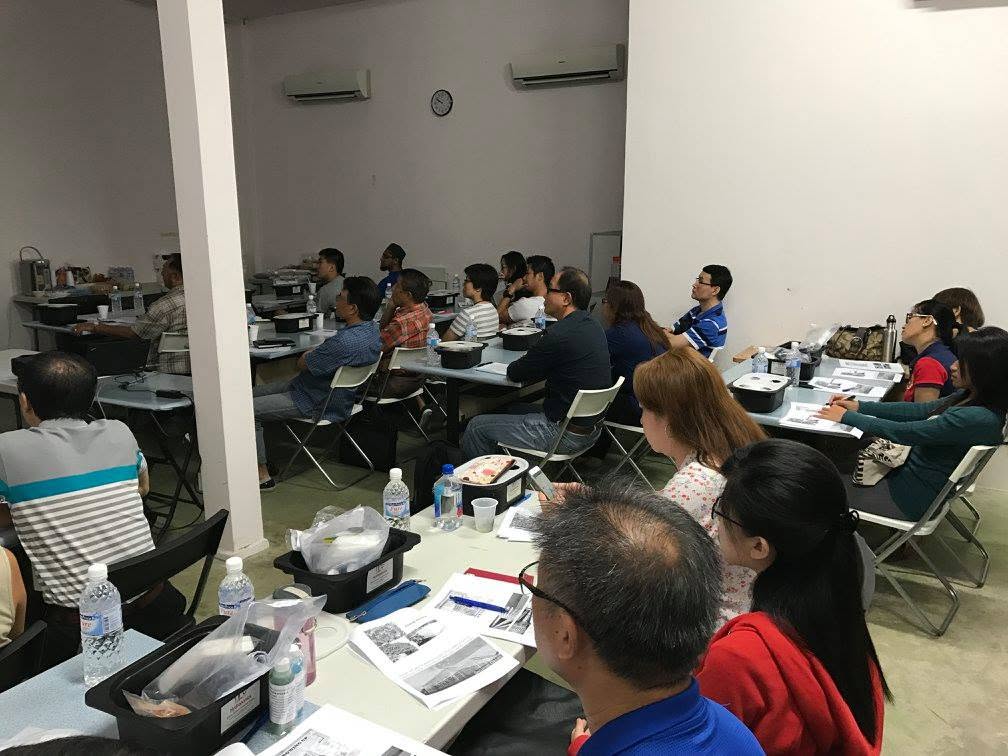
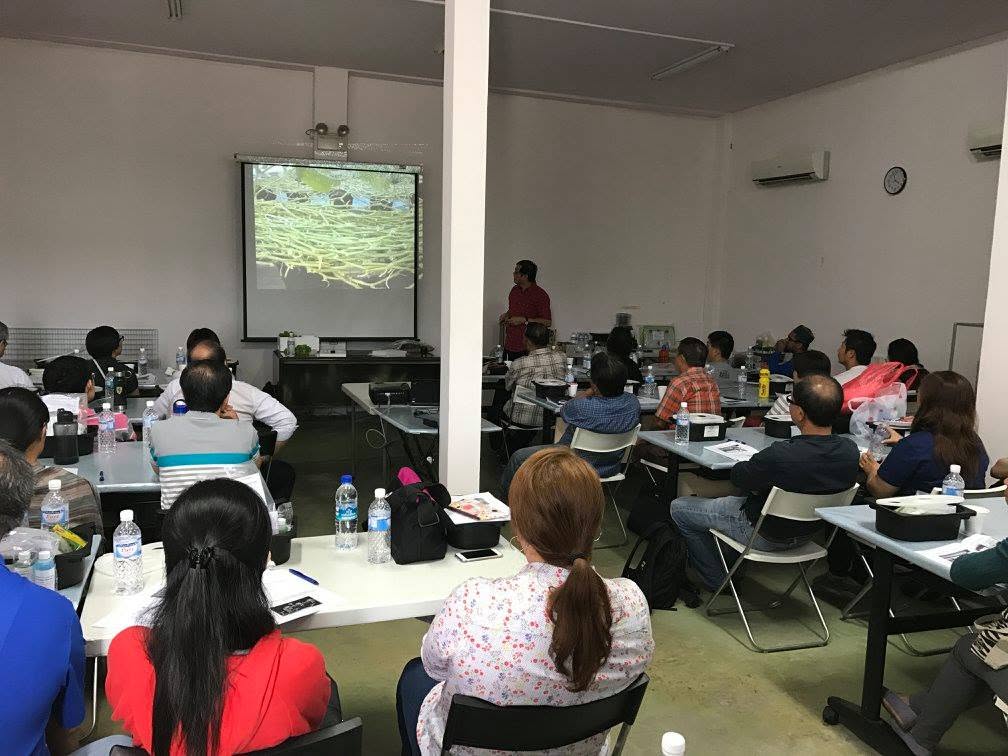
The structure has never changed: a short block of theory, then straight to the tubs. The lecture exists to make the practical make sense, not the other way round.
The questions a full room produces
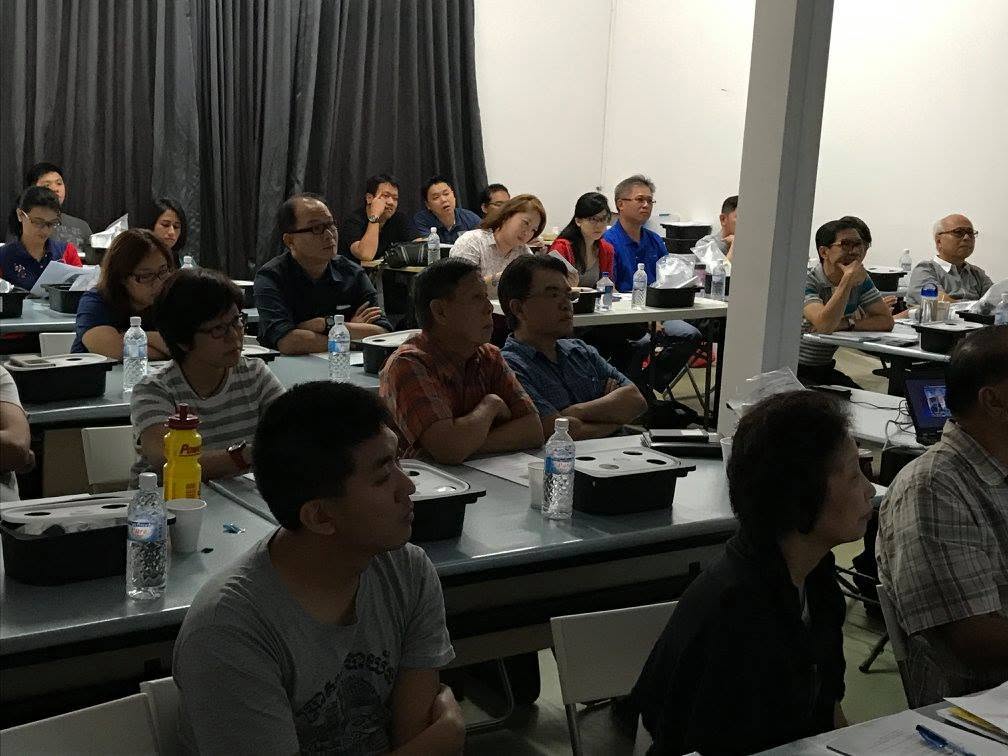
A room this size always surfaces the same handful of questions, and they are worth answering here because they are almost certainly yours too:
- "Nothing has come up. Is it dead?" Usually not, and usually it is too early. Different seeds have genuinely different timelines, and temperature shifts them. Resist adjusting anything before you have given it the days it needs.
- "Should I add more nutrient to speed it up?" No. A germinating seed lives on its own reserves and needs very little. Too strong a solution at that stage does damage rather than good.
- "Why did only some sites come up?" Almost always uneven moisture in the medium — a sponge dry in the middle, or one sitting slightly higher and not wicking. It is a mechanical problem, not a nutrient one.
- "How much light do seedlings need?" More than most people give them, and early. A seedling stretching tall and thin is reaching for light it cannot find, and it will not recover from that leggy start.
Ending the day with something that works
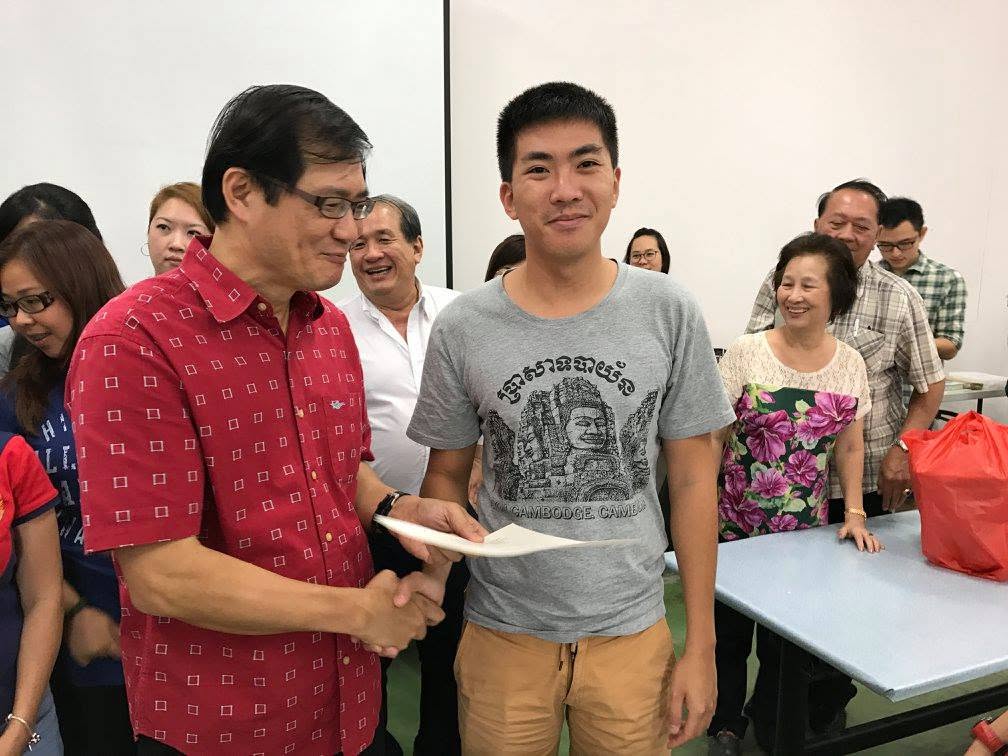
Everyone left with a certificate and, more usefully, an assembled system and a realistic idea of what the first two weeks would look like. In 2016 that certificate came from the course provider. Today the course carries WSQ accreditation, a formal assessment and an OpenCert from SkillsFuture Singapore — but the thing that determines whether you succeed is still whether you know what day three should look like.
The course today
WSQ - Basic Urban Farming with Hydroponics (course code TGS-2025053916) is a 1-day, 8-hour class at Beginner level with a 1-hour assessment, held at MEOD Farm, 13 Neo Tiew Harvest Lane. It maps to the SkillsFuture Skills Framework TSC Urban Farming Implementation and Management Control (AGR-FOP-2002-1.1), with two learning outcomes:
- Perform farming activities and equipment operations according to standard operating procedures
- Execute farming operations work in accordance with regulations, WSH practices and housekeeping rules
The day covers hydroponic system types (deep water culture, nutrient film technique, wick, ebb and flow, drip), growing media, plant nutrition and nutrient solutions, pH and EC monitoring, indoor farming conditions, Singapore's urban farming regulations, good agriculture practices and workplace safety — plus hands-on practice with a hydroponics kit and a guided tour of a commercial hydroponics farm.
What it costs
The full fee is $350 before GST. With WSQ funding:
| Who you are | Nett fee | Funding |
|---|---|---|
| Singapore Citizen / PR, aged 21 and above | $206.50 | 50% course-fee funding |
| Singapore Citizen aged 40 and above (MCES), or SME-sponsored | $136.50 | 70% course-fee funding |
GST of $31.50 (9%) applies to the full course fee. Funding is valid from 24 March 2025 to 23 March 2027. Eligible Singapore Citizens can apply SkillsFuture Credit and PSEA against the nett fee, NTUC members may claim UTAP, and employers can tap SFEC with Absentee Payroll support. Completion — at least 75% attendance plus a pass in the assessment — earns a Certificate of Achievement from Tertiary Infotech Academy and an OpenCert (Statement of Achievement) from SkillsFuture Singapore.
Check the next class date and funding eligibility →
Frequently asked questions
How long should germination take?
It depends on the seed and the temperature, and the honest answer is that it varies more than beginners expect. The useful discipline is to know roughly what your chosen crop should do and leave it alone until then. Most first-attempt failures come from intervening too early rather than from anything being genuinely wrong.
Should I use full-strength nutrient on seedlings?
No. A germinating seed runs on its own stored reserves and needs very little, so a strong solution at that stage does harm rather than good. Nutrient strength is increased as the plant develops real leaves and starts drawing on the solution properly.
Why did only some of my sites germinate?
Usually uneven moisture rather than bad seed. A grow sponge that is dry in its middle, or one seated slightly high so it does not wick, leaves that seed without water while its neighbours are fine. Soak the medium through, squeeze out the excess, and seat each one flush.
Does the number of holes in the lid matter?
Yes, and it is a decision rather than a detail. More sites means more plants but less space each; crowded leafy greens shade one another and trap humidity, which invites disease. Fewer, wider-spaced sites suit anything that fills out. Choose the lid for the crop you intend to grow.
Where is the class held now?
At MEOD Farm, 13 Neo Tiew Harvest Lane, Singapore 719838. The 2016 class was at Toh Orchid Farm; the venue has changed over the years, but teaching on a working farm has not.
Where to go next
Germination is the least glamorous part of hydroponics and the part that most decides whether you get a harvest. Get the first fortnight right and the rest is maintenance.
- Soak the medium properly, seat it flush, and give seedlings light early.
- Join the next WSQ - Basic Urban Farming with Hydroponics class — from $136.50 nett for eligible Singapore Citizens aged 40 and above.
- Write down what you did and what day things happened. The log is what turns one crop into a skill.
More from this course: our 2015 class at Toh Orchid Farm, our very first class in 2014, how hydroponics works, building a deep water culture kit, and inside a working hydroponic farm.