You have no items in your shopping cart.
Course Details
Course Details
What You'll Learn
LU1: Data Engineering
T1: Create data repositories for machine learning (K2)
T2: Identify and implement data ingestion solutions (K5, A2)
T3: Identify and implement data transformation techniques (A3)
LU2: Exploratory Data Analysis
T1: Clean, sanitize, and prepare data for modelling (K6, A5)
T2: Perform feature engineering to enhance model performance (K8)
T3: Analyze and visualize data for machine learning insights (K7)
LU3: Modelling
T1: Frame business problems as machine learning problems (K4)
T2: Select appropriate models for different machine learning tasks (A1)
T3: Train and validate machine learning models (K3)
T4: Perform hyperparameter tuning and optimization (A4)
T5: Evaluate model performance using appropriate metrics (K1)
Assessment
- Written Exam
- Practical Exam
Course Info
Minimum Entry Requirement
Knowledge and Skills
- Able to operate using computer functions
- Minimum 3 GCE ‘O’ Levels Passes including English or WPL Level 5 (Average of Reading, Listening, Speaking & Writing Scores)
Attitude
- Positive Learning Attitude
- Enthusiastic Learner
Experience
- Minimum of 1 year of working experience.
Target Age Group: 18-65 years old
Minimum Software/Hardware Requirement
Software:
- A Google account for Google Colab (free T4 GPU runtime) - no local installation needed
- A free Hugging Face account
Hardware: Windows or Mac laptop with a modern web browser. No local GPU is required.
Funding Eligibility Criteria
Self-sponsored learners (individuals)
- Singapore Citizens and Singapore Permanent Residents aged 21 and above.
- Up to 50% course fee funding. Singapore Citizens aged 40 and above receive up to 70% under the Mid-career Enhanced Subsidy (MCES).
- Singapore Citizens aged 25 and above can pay the remaining fee with SkillsFuture Credit.
Company-sponsored learners
- Singapore Citizens and Singapore Permanent Residents who are direct employees of the sponsoring company.
- Up to 50% course fee funding, or up to 70% for employees of SMEs (Enhanced Training Support for SMEs) and for Singapore Citizens aged 40 and above. An SME has no more than 200 employees or an annual turnover of no more than $100 million.
- Employers can also claim Absentee Payroll funding for employees who attend during working hours.
- Eligible companies can offset their out-of-pocket fees with SkillsFuture Enterprise Credit (SFEC).
Conditions for all funded learners
- Attendance is taken digitally with Singpass for every session, including the assessment.
- You must complete the course and pass all assessments (assessed as Competent).
- If these conditions are not met, the funding is clawed back and the learner or employer pays the full course fee.
- 9% GST is charged on the full course fee before funding.
- Promo and discount codes cannot be used on funded courses.
- Any balance after funding can be paid in cash, with SkillsFuture Credit, with PSEA (Singapore Citizens with a PSEA).
How to Apply SkillsFuture Credit Claim for Individuals
Singapore Citizens aged 25 and above can use their SkillsFuture Credit (base tier) to pay the course fee after funding. The $4,000 mid-career top-up cannot be used for this course.
- Register for this course as self-sponsored and tell us you will use SkillsFuture Credit. Do not pay the amount you plan to claim.
- We email you an invoice showing the course fee after funding.
- From 60 days before the course starts, and no later than the course start date, log in to MySkillsFuture with Singpass and click Claim credits.
- Click Submit a Claim and search for this course by its course code, TGS-2025059025.
- Select your class start date, enter the course fee payable after funding and the amount of credit to claim, then upload the invoice (PDF, JPG or PNG, under 4MB).
- Review, accept the terms and click Agree and Submit. The credit is paid directly to us; processing can take up to 14 working days.
Changing or withdrawing: cancel the claim on MySkillsFuture at least one day before the course starts. If your class date changes, cancel the claim and submit a new one with the new date.
How to Apply SkillsFuture Enterprise Credit (SFEC)
SFEC helps companies pay for employee training. The current SFEC ends on 30 November 2026, and a redesigned SFEC starts on 1 December 2026.
Current SFEC: classes ending on or before 30 November 2026
- Eligible companies received a one-off $10,000 credit, notified by letter to their Corppass administrator. Eligibility generally required at least 3 Singapore Citizen or PR employees and Skills Development Levy contributions.
- SFEC covers up to 90% of the company's out-of-pocket course fee after other subsidies.
- Check your company's SFEC eligibility and balance on EnterpriseSG.
- Register your Singapore Citizen or PR employee for a class that ends by 30 November 2026, as company-sponsored, and pay the course fee after funding.
- Your employee attends and completes the course. We submit the attendance and assessment results to SWDA.
- No separate claim is needed. SFEC is calculated automatically once the course fee grant is approved and is paid quarterly to your company's IRAS GIRO or PayNow Corporate account.
Any unused balance of the current SFEC expires on 30 November 2026.
Redesigned SFEC from 1 December 2026
Companies with at least 3 resident employees receive a fresh $10,000 in an online SFEC wallet that offsets out-of-pocket fees upfront at enrolment, instead of reimbursing them afterwards. SWDA has not yet published the support rates and claim steps; see OurWorkforce or our SFEC guide.
How to Apply PSEA
Singapore Citizens with a Post-Secondary Education Account (PSEA), which stays open until around the year you turn 31, can use it to pay the course fee after funding for PSEA-approved courses. You can also use a sibling's PSEA after your own has been used up.
- Check that this course shows the PSEA tag on its MySkillsFuture page.
- Check your PSEA balance on MOE's Student Finance System with Singpass.
- Download and complete the PSEA withdrawal form, then submit it to us.
- We submit the withdrawal request to MOE. You (and your sibling, if you are using their account) authorise it in the Student Finance System. Nothing is withdrawn without this authorisation.
- MOE pays us directly. If you have already paid, we refund the amount covered by PSEA.
More details: MOE PSEA overview.
Appeal Process
If you disagree with an assessment decision, you have the right to appeal.
- When the assessor gives you feedback, say whether you agree with the outcome. If you agree, you and the assessor sign the Assessment Summary Record; if you disagree, do not sign it.
- Discuss the decision with the assessor or the assessment manager first.
- If you are still not satisfied, tell the assessor you intend to appeal. The assessor records this in the feedback section of the Assessment Summary Record and informs the assessment manager.
- Lodge your appeal within 7 days, giving your reasons, using the Candidate Appeal Form. The assessor can help you write and lodge it.
- An Assessment Appeal Panel reviews the information from you and the assessor and makes a decision. A record of the appeal and its outcome is kept.
- You will be told the outcome within 2 weeks of lodging the appeal. The panel's decision is final.
Job Roles
Job Roles
- Machine Learning Engineer
- Data Scientist
- AWS ML Specialist
- AI Engineer
- Data Engineer
- Cloud Machine Learning Architect
- ML Operations Engineer
- AI/ML Consultant
- Applied Scientist
- Deep Learning Engineer
- Business Intelligence Developer
- Cloud Solutions Architect
- Data Analyst
- DevOps Engineer (ML-focused)
- Technical Product Manager (AI/ML)
- AI Research Engineer
- Software Engineer (ML Integration)
- Big Data Specialist
- IT Systems Engineer (AI Tools)
- Automation Engineer (AI/ML)
Trainers
Trainers
Amin Mahetar is a cloud and DevOps engineer with over 15 years of experience in IT infrastructure, automation, and cloud solutions across AWS and Microsoft Azure environments. A Microsoft Certified Trainer (MCT) and Azure Administrator Associate, he has implemented and managed enterprise-scale cloud deployments across industries including finance, logistics, and manufacturing. His areas of expertise include virtualization, networking, identity management, and automation using PowerShell and Azure CLI. Known for his structured and hands-on training style, Amin has guided numerous professionals in achieving their Azure certifications and advancing their cloud careers.
Mohan Pothula is an accomplished Enterprise Architect with over 20 years of experience leading data strategy, AI adoption, and cloud modernization initiatives for global financial institutions and enterprises. He has designed large-scale AWS-based architectures for DBS Bank, SPH, and Mediacorp, integrating data platforms with microservices and big data analytics frameworks. His expertise covers enterprise data architecture, real-time analytics, cloud migration, and the implementation of CI/CD pipelines for scalable AI-driven systems. Mohan’s deep understanding of both business and technology domains enables him to align organizational strategy with cloud-native and machine learning capabilities.
In this AWS Certified Machine Learning Specialty Training course, Mohan provides a strategic and hands-on perspective on developing and deploying ML solutions at scale. He emphasizes architecting AI pipelines using AWS services such as SageMaker, Glue, Redshift, and Lambda—ensuring they meet enterprise-level performance, scalability, and compliance requirements. His sessions help learners master the intersection of data engineering and AI deployment within secure AWS infrastructures.
CY Quah is an ACLP-certified trainer and data science professional with extensive experience in Python, NLP, and machine learning. He has led AI training programs for SAP, Temasek Polytechnic, and IMDA under the SGUnited Mid-Career Pathways initiative, and has delivered corporate workshops on text analytics, recommender systems, and chatbot development. His expertise includes applying NLP tools such as NLTK, spaCy, and Gensim for sentiment analysis, topic modeling, and text classification.
Agus Salim is an experienced IT solutions and cybersecurity professional with a strong foundation in cloud infrastructure and project management. With over a decade of experience in systems integration, software development, and IT security across both enterprise and consulting environments, he brings a practical understanding of secure system design and deployment. His credentials include PMP, CompTIA Security+, CEH, and AWS Certified Cloud Practitioner, reflecting his balanced expertise in governance, risk management, and cloud operations. Agus has worked with leading organizations such as Citi and Check Point Software Technologies, providing hands-on technical and security support across multi-cloud platforms.
Dr. Alfred Ang is a distinguished AI and digital transformation leader with over 20 years of experience in advanced computing, machine learning, and workforce development. As Chief Instructional Designer, Chief Technology Officer, and Chief Information Officer of Tertiary Infotech Pte Ltd, he has developed more than 500 WSQ- and IBF-accredited courses, bridging technical depth with industry-aligned training. He holds a PhD from the National University of Singapore, Master’s degrees from NTU, and an MBA from U21 Global, complemented by certifications including AWS Certified Machine Learning – Specialty, AWS AI Practitioner, AWS SysOps Administrator, and Microsoft Certified Azure AI Engineer. His expertise spans deep learning, NLP, computer vision, and cloud-based ML pipelines, reinforced by industrial projects such as robotic vision systems, agentic AI workflows, and multimodal AI platforms
As an ACLP- and DACE-certified curriculum developer, Dr. Ang has trained thousands of professionals in data science, AI, and cloud technologies, delivering courses for financial institutions, corporates, and government agencies. His teaching emphasizes hands-on, applied learning using AWS SageMaker, ML pipelines, and deployment strategies that prepare learners for the AWS Machine Learning Specialty certification. In addition to technical mastery, he integrates responsible AI and ethical considerations into his pedagogy, ensuring learners build scalable and trustworthy ML solutions. With his proven record of innovation, mentorship of interns from NUS, SIT, and NYP, and leadership in both industry and education, Dr. Ang is ideally positioned to guide participants in mastering AWS machine learning tools and certifications for real-world applications
Review
Write Your Own Review
- Recommended Courses
- Related Courses
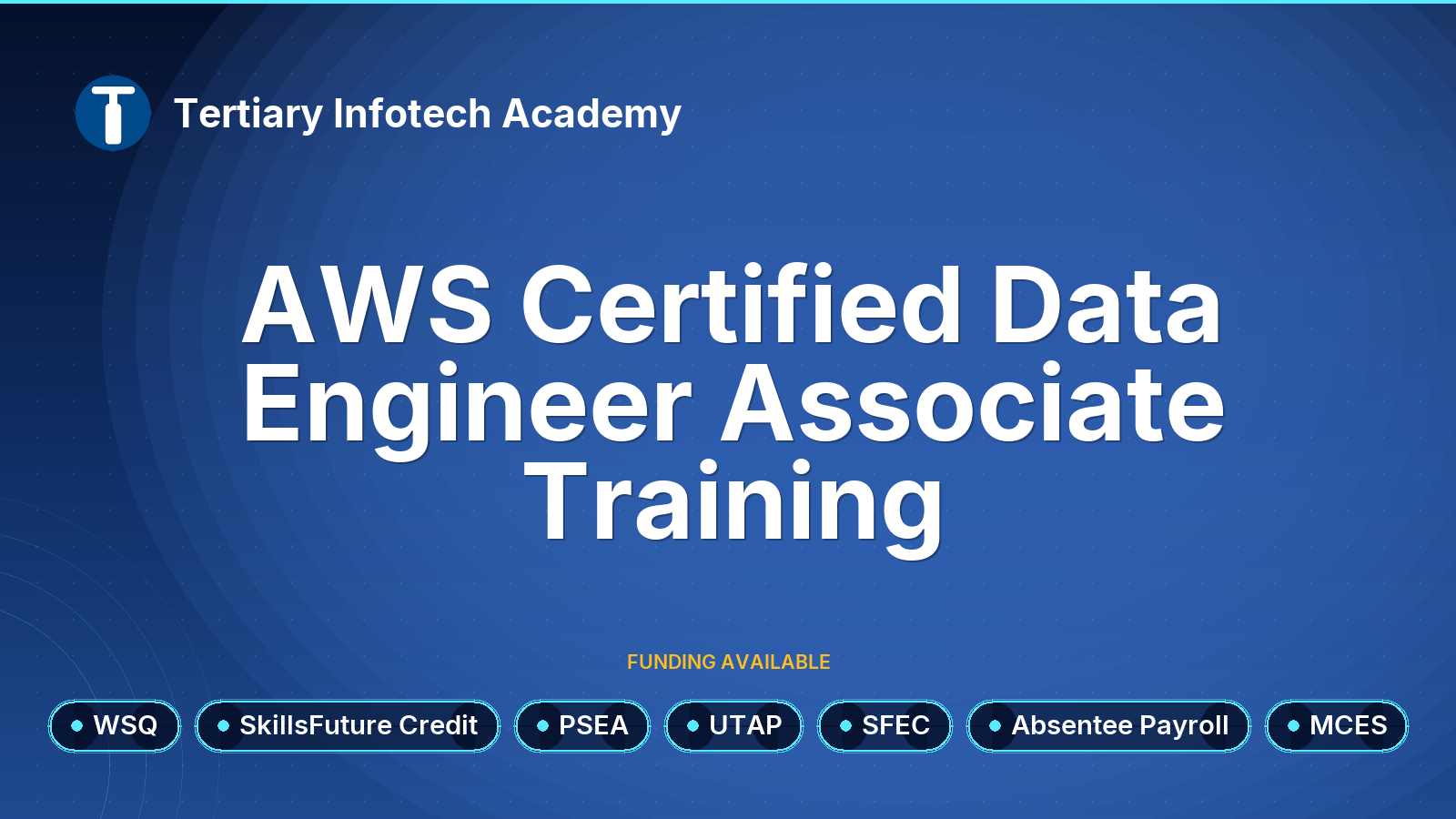
WSQ - AWS Certified Data Engineer Associate Training
$1,500.00 (GST-exclusive)
$1,635.00
(GST-inclusive)
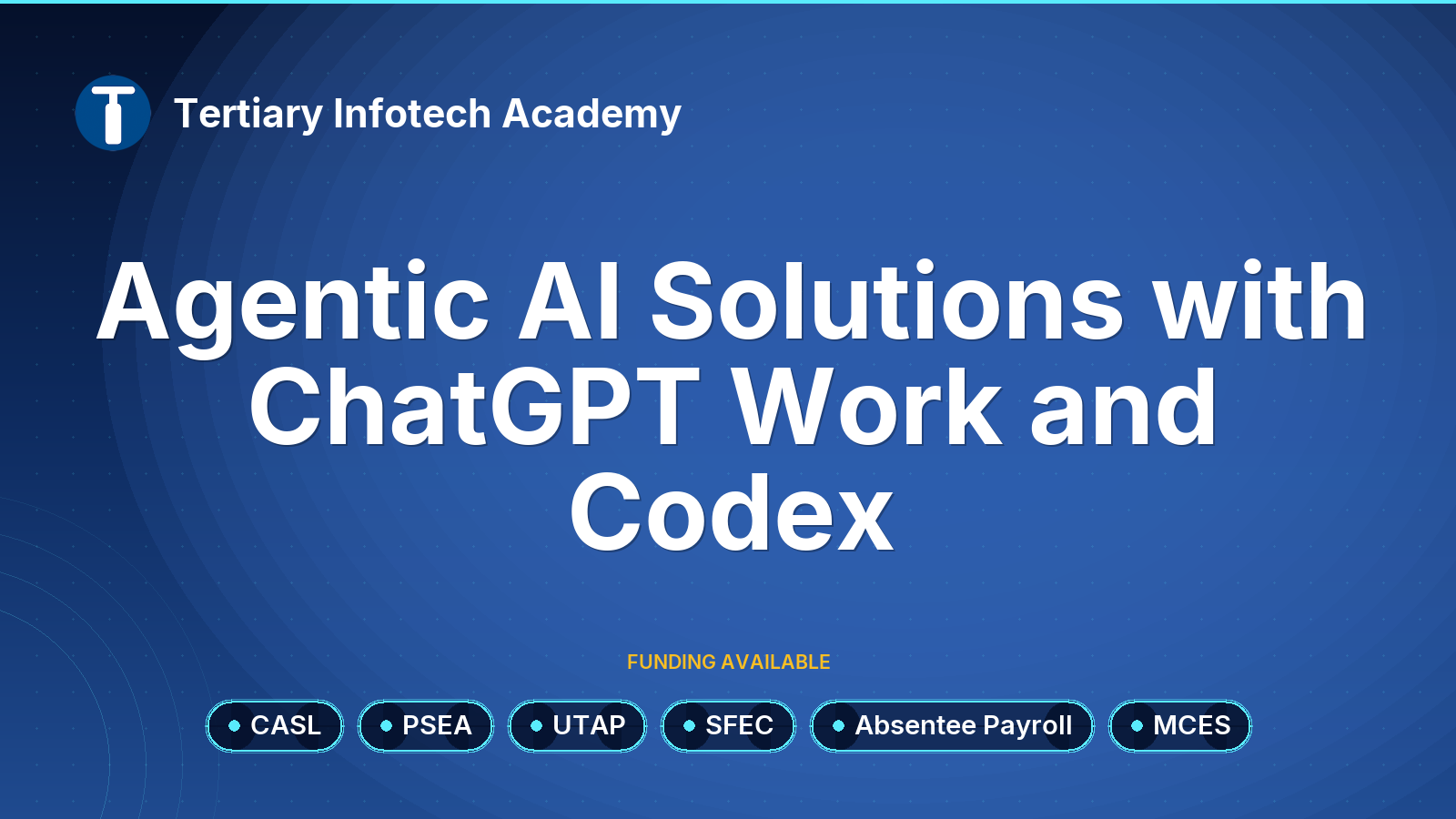
CASL - Agentic AI Solutions with ChatGPT Work and Codex
$1,500.00 (GST-exclusive)
$1,635.00
(GST-inclusive)
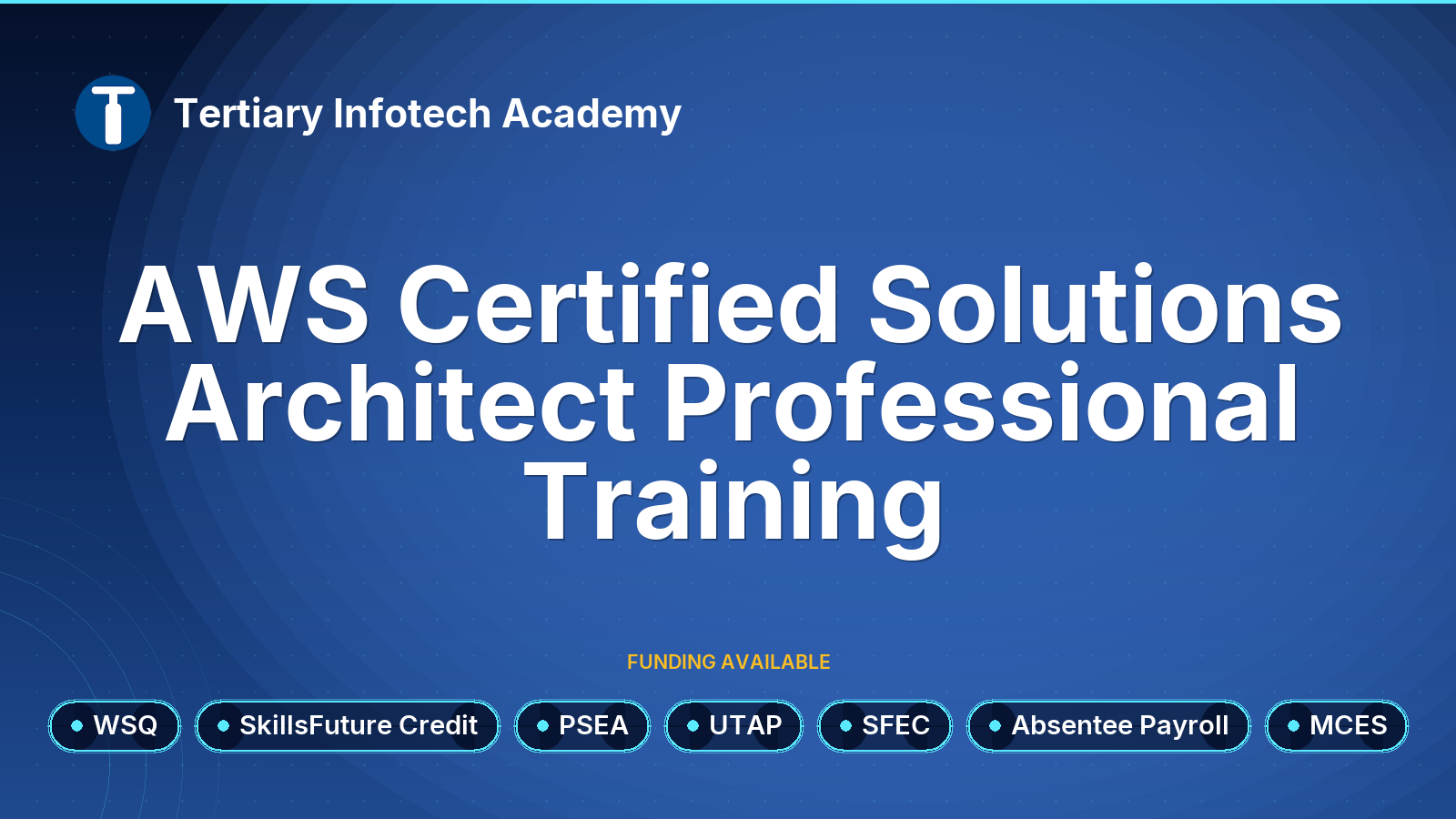
WSQ - AWS Certified Solutions Architect Professional Training
$2,000.00 (GST-exclusive)
$2,180.00
(GST-inclusive)
WSQ - AWS Certified SysOps Administrator Associate Training
$1,500.00 (GST-exclusive)
$1,635.00
(GST-inclusive)
WSQ - AWS Certified Developer Associate Training
$1,500.00 (GST-exclusive)
$1,635.00
(GST-inclusive)
WSQ - AWS Certified Machine Learning Engineer Associate Training
$1,500.00 (GST-exclusive)
$1,635.00
(GST-inclusive)
WSQ - AWS Certified DevOps Engineer Professional Training
$2,000.00 (GST-exclusive)
$2,180.00
(GST-inclusive)
Check items to add to the cart or select all