You have no items in your shopping cart.

Blog / Why Singapore Should Care About Hydroponics — Notes From Our 6 June 2026 Urban Farming Class
Why Singapore Should Care About Hydroponics — Notes From Our 6 June 2026 Urban Farming Class
Singapore imports more than 90% of the food it eats. Less than 1% of its land is set aside for agriculture. Those two numbers sit uncomfortably next to each other, and they are the entire reason urban farming here is a serious policy question rather than a weekend hobby.
Hydroponics is the method that fits the constraint. It grows plants in a nutrient solution instead of soil, which means it does not need arable land — it needs a surface. A rooftop, a car-park deck, a spare room, a warehouse. That single property is why the technology keeps showing up wherever land is the binding constraint.
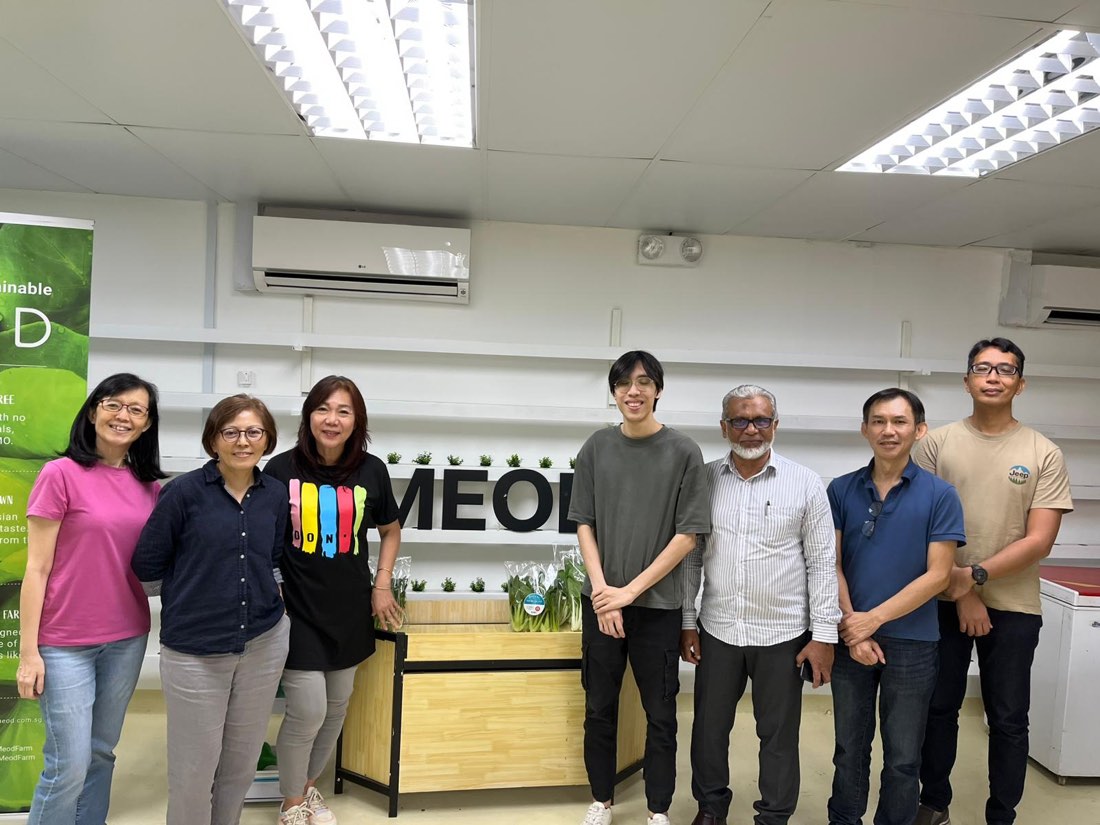
On 6 June 2026 we ran our WSQ - Basic Urban Farming with Hydroponics class at MEOD Farm in Neo Tiew Harvest Lane. This post is partly a record of that day and partly the argument we make in it: why this is worth learning in Singapore specifically.
The case for hydroponics in Singapore
1. It does not need land, only surface
This is the argument that matters most locally. Conventional farming needs soil of a certain depth and quality across a wide area. Hydroponics needs a structurally sound flat surface and a power point. It is the difference between competing for scarce agricultural land and using space that is already built.
The proof is visible around the island. ComCrop built its greenhouse on a rooftop in Woodlands. Sustenir Agriculture grows strawberries and kale indoors in a climate they control completely. In late 2025, Greenphyto opened a vertical farm with growing chambers 23 metres tall — reported as the tallest in the world, with an output per unit area the Business Times put at 45 times higher than traditional farming methods. None of these are on farmland in any traditional sense.
2. It uses dramatically less water
This is the point most people find counter-intuitive, because the plants are sitting in water. But a hydroponic system recirculates. In soil, most irrigation water drains past the root zone or evaporates and is gone. In a closed hydroponic loop, the solution the plant does not drink returns to the reservoir and is used again. You top up what the plants actually consumed and what evaporated, not what the ground swallowed.
For a country that has spent decades engineering its way out of water dependence, a growing method that recirculates rather than drains is not a small detail.
3. You control the growing environment, so the harvest is predictable
Singapore's outdoor climate is hot, humid, and does not vary much by season — which is either a constraint or an asset depending on whether you can control it. Indoors, you set the light, temperature, humidity and nutrient recipe yourself. The Singapore Food Agency makes the commercial version of this point in its myth-busting article on hydroponics: controlling temperature, humidity, airflow and CO2 lets farmers produce "desired taste and texture profiles" and gives more predictable outcomes in taste and harvest.
Predictability is what turns growing food from a gamble into a business. It is also what lets a first-time grower succeed on their first attempt, which matters more than it sounds for whether people keep going.
4. No soil means fewer soil problems
Take the soil away and a whole category of trouble goes with it: soil-borne disease, weeds, and the pesticides that answer them. It is not a sterile system and it is not maintenance-free — you trade soil problems for water-quality and root-health problems — but the trade is usually a good one in a controlled indoor space.
5. Growth is faster, and the crop is not less nutritious
Nutrients dissolved in water reach roots more directly than nutrients bound up in soil, so plants spend less energy foraging and more growing. Leafy greens are the classic case: many are harvestable in weeks rather than months.
On the nutrition question, which comes up in every class: the SFA article addresses it directly. Plants take 3 nutrients from the air and 13 from water or nutrient solution — the same 13 either way. The agency cites a Scientia Horticulturae comparison in which tomatoes grown hydroponically by Nutrient Film Technique carried more vitamin C than soil-grown tomatoes, because the grower controls the nutrient recipe precisely.
What the 6 June class actually did
The course is one day, 8 hours, and deliberately hands-on. The theory only earns its place by making the practical part make sense.
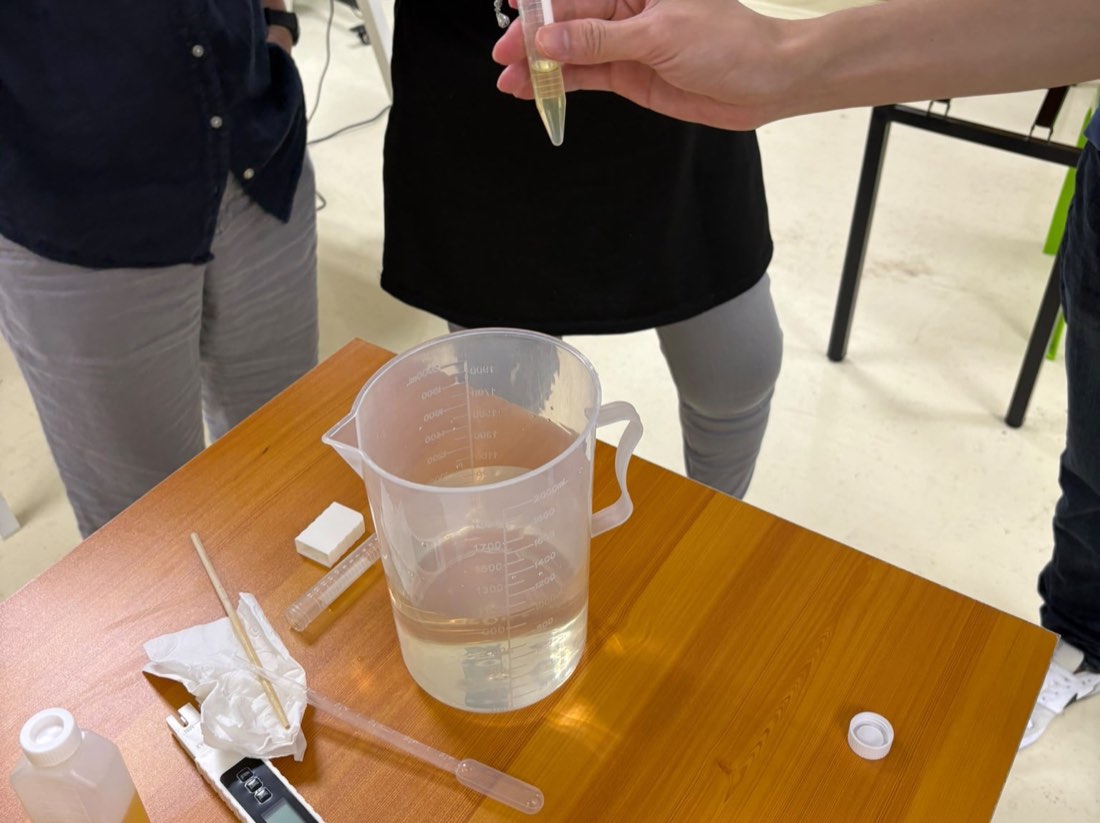
That photograph is the heart of the day. Participants mix nutrient solution from A and B concentrates, then measure it — EC (electrical conductivity, which tells you how much nutrient is dissolved) and pH (which decides whether the plant can actually absorb it). Get the pH wrong and the nutrients are present but locked away; the plant starves in a full tank. Two cheap meters and the habit of using them is most of the difference between a system that produces and one that quietly fails.
Across the day the class covers:
- How the main hydroponic systems work — deep water culture, nutrient film technique, wick, ebb and flow, drip — and which suits which situation
- Growing media: clay pebbles, rockwool, coco peat, and what each does for water retention and aeration
- Plant nutrition, and mixing and correcting a nutrient solution
- Measuring and adjusting pH and EC, and reading what a drifting number is telling you
- Indoor farming conditions: lighting, temperature, humidity
- Singapore's urban farming regulations, good agriculture practices and workplace safety
- A guided tour of a commercial hydroponics farm, plus hands-on practice with a hydroponics kit
The farm tour is there for a specific reason. A tabletop kit and a commercial grow room run on the same principles, and seeing both on the same day makes the scaling obvious in a way a slide cannot.
Where hydroponics is harder than it looks
An honest pitch includes the failure modes:
- Power is a dependency. Pumps and grow lights need electricity. A long outage in a recirculating system is a real risk, and lighting is the main running cost of indoor growing.
- Small errors propagate fast. Every plant shares one reservoir, so a pH swing or a mixing mistake reaches all of them at once. This is exactly why the class drills measurement.
- Not every crop suits it. Leafy greens and herbs are easy wins. Root vegetables and large fruiting crops are possible but harder — more structure, more nutrient demand, longer to harvest.
- Startup cost is real, though smaller than people assume. SFA notes a complete beginner kit can be had for under $100, and that government support exists for farms adopting high-tech practices — but a commercial build is a capital project.
The course, and what it costs
WSQ - Basic Urban Farming with Hydroponics (course code TGS-2025053916) is a 1-day, 8-hour class at Beginner level with a 1-hour assessment, held at MEOD Farm, 13 Neo Tiew Harvest Lane. It maps to the SkillsFuture Skills Framework TSC Urban Farming Implementation and Management Control (AGR-FOP-2002-1.1).
The two learning outcomes are operational rather than academic:
- Perform farming activities and equipment operations according to standard operating procedures
- Execute farming operations work in accordance with regulations, WSH practices and housekeeping rules
The full fee is $350 before GST. With WSQ funding:
| Who you are | Nett fee | Funding |
|---|---|---|
| Singapore Citizen / PR, aged 21 and above | $206.50 | 50% course-fee funding |
| Singapore Citizen aged 40 and above (MCES), or SME-sponsored | $136.50 | 70% course-fee funding |
GST of $31.50 (9%) is calculated on the full course fee. Funding is valid from 24 March 2025 to 23 March 2027 — registration and completion both need to fall inside that window.
Eligible Singapore Citizens can use SkillsFuture Credit against the nett fee (the $4,000 Additional SFC for Mid-Career Support cannot be used), and PSEA funds can be applied. NTUC members may claim UTAP, employers can tap SFEC, and Absentee Payroll support is available. On completion — at least 75% attendance and a pass in the assessment — you receive a Certificate of Achievement from Tertiary Infotech Academy and an OpenCert (Statement of Achievement) from SkillsFuture Singapore.
Check the next class date and funding eligibility →
Frequently asked questions
Do I need any farming or gardening experience?
No. The course is pitched at Beginner level and assumes no background. Most participants have never grown anything before. What you need is a willingness to measure things carefully — hydroponics rewards precision more than it rewards a green thumb.
Can I actually do this in an HDB flat?
Yes, at small scale. A countertop or shelf unit with an LED grow light and a small reservoir will keep a household in leafy greens and herbs. The constraints are power, a bit of space, and somewhere you do not mind occasional water. Larger balcony or corridor setups are possible but check your town council rules first — the course covers Singapore's urban farming regulations.
Is hydroponic produce organic, or full of chemicals?
The nutrients are mineral salts — the same 13 elements plants take up from soil, just delivered dissolved in water. SFA addresses this myth directly: the concentrations are minimal and the compounds are absorbed and converted by the plant, not eaten by you. Nutrient content is on par with, and sometimes higher than, soil-grown equivalents.
How much does it cost to start at home?
SFA puts a complete basic beginner kit at under $100. You can go cheaper with a DIY deep water culture bucket, or considerably higher with a multi-tier lit rack. The two things worth spending on early are a TDS/EC meter and a pH meter — without them you are growing blind.
What can I use my funding on, and how long is it valid?
WSQ subsidy brings the $350 fee to $206.50, or $136.50 for Singapore Citizens aged 40 and above under MCES. SkillsFuture Credit and PSEA can then be applied against the nett amount, and NTUC members may claim UTAP. Funding for this course runs from 24 March 2025 to 23 March 2027.
Where is the class held?
At MEOD Farm, 13 Neo Tiew Harvest Lane, Singapore 719838. Holding it on a working farm is deliberate — the guided tour of a commercial hydroponics operation is part of the day, alongside hands-on practice with a hydroponics kit.
Where to go next
The 90%-import figure is not going to be solved by anyone's balcony. But the reason Singapore invests in urban farming at all is that the capability has to exist somewhere — in commercial farms, in schools, in the people who can run and fix these systems. Every one of those starts with someone learning to mix a nutrient solution and read a meter.
- Decide what you want to grow. Leafy greens and herbs are where every sensible beginner starts.
- Join the next WSQ - Basic Urban Farming with Hydroponics class — from $136.50 nett for eligible Singapore Citizens aged 40 and above.
- Build the smallest system that works, measure it obsessively for one crop cycle, then scale.
Curious what else is possible? Our follow-up post covers growing rockmelons hydroponically in Singapore — from the 11 October 2025 run of the same course.