You have no items in your shopping cart.
Blog / IoT at ITE College West: Our 3 January 2018 Class for ITE Staff
IoT at ITE College West: Our 3 January 2018 Class for ITE Staff
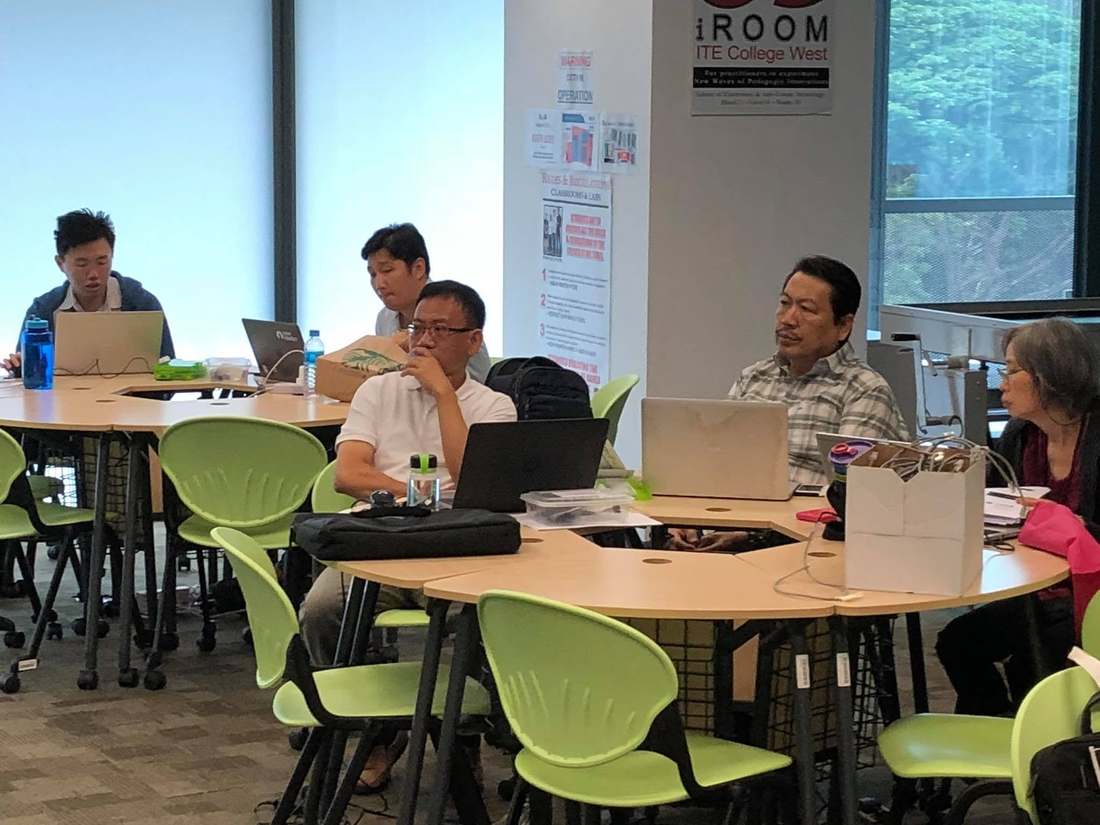
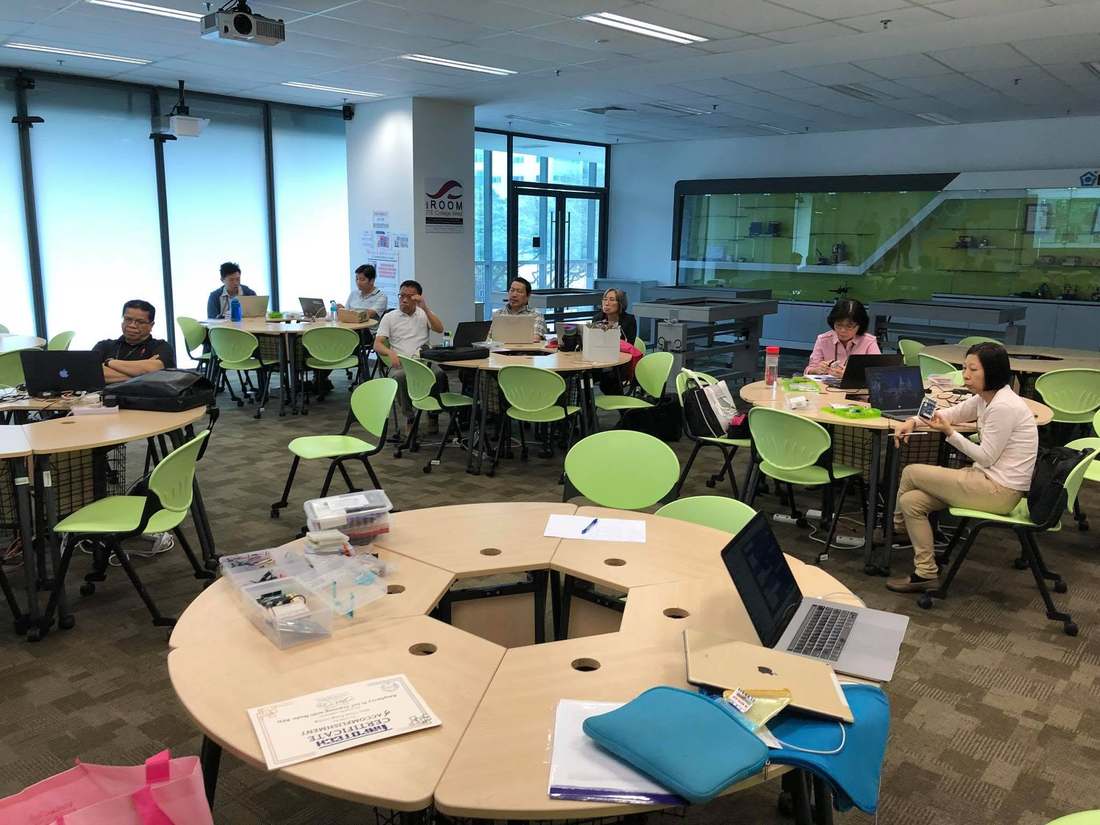
On 3 January 2018, we ran an Internet of Things (IoT) class in the iROOM at ITE College West for a group of ITE staff — lecturers and technical officers who teach the next generation of Singapore's engineers and technicians. Leading the session was Mr Reza, a veteran IoT practitioner. By the end of the day, every table had a working sensor posting live readings to the cloud.
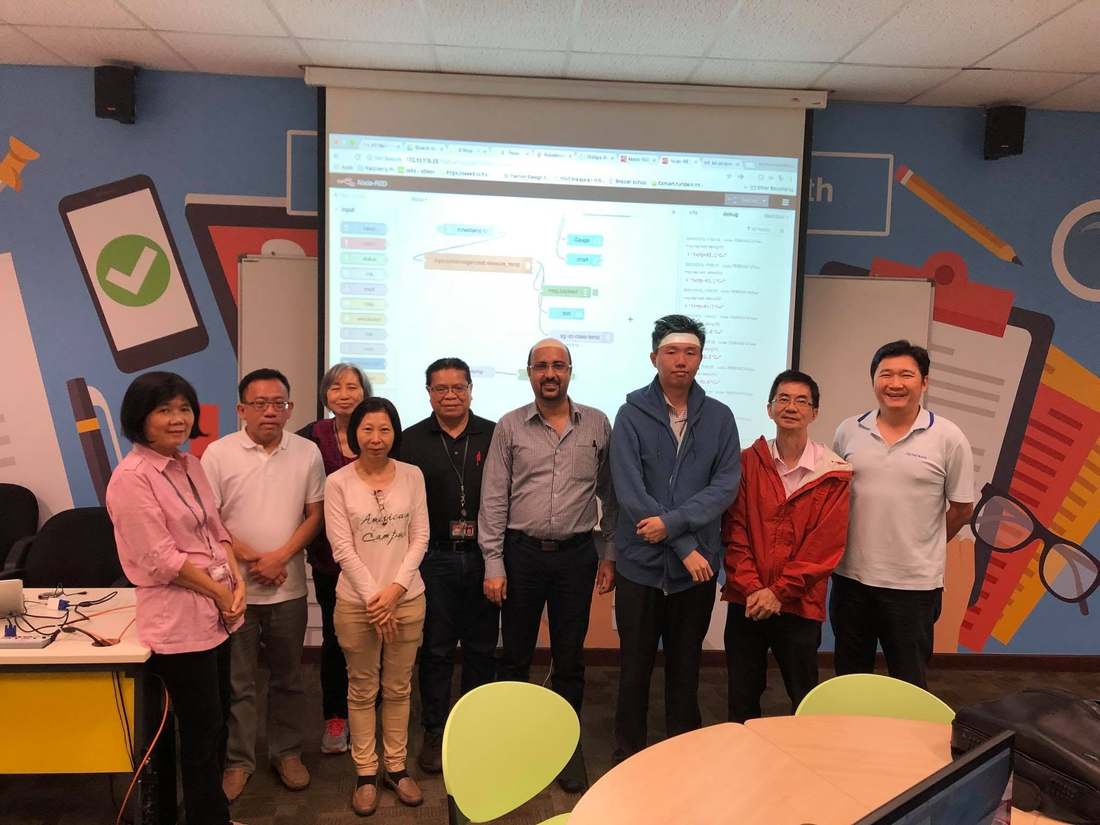
Teaching teachers is its own kind of pressure. This group knew hardware, knew networks, and would be taking whatever they learned straight back into their own classrooms. They did not want a technology overview — they wanted to build the thing and understand exactly where it could break.
Why IoT is worth your afternoon
The Internet of Things is what happens when ordinary objects get a sensor, a network connection and somewhere to send their readings. A temperature probe in a server room, a water meter, a machine that reports its own vibration — individually small, collectively the largest source of new operational data most organisations will ever have.
The case for learning it comes down to a few things that consistently land with working professionals:
- It makes the invisible measurable. Most facilities and processes run on assumption and periodic manual checks. A $10 sensor reporting every thirty seconds replaces "we think it stays around 24 degrees" with a graph you can act on.
- The hardware barrier has collapsed. A microcontroller with WiFi costs a few dollars. What used to need an engineering budget now needs an afternoon and a breadboard.
- Predictive rather than reactive maintenance. Equipment that reports its own condition gets serviced before it fails, not after — which is the difference between a scheduled repair and an unscheduled shutdown.
- It is the data layer everything else needs. Analytics, dashboards and AI models are only as good as the measurements feeding them. IoT is how the physical world gets into your database in the first place.
- The skills stack cleanly. Sensors, wireless protocols, cloud APIs, dashboards — each piece is useful alone, and together they are a complete, employable capability.
- You can see it working. Unusually for a data technology, IoT gives immediate physical feedback. Breathe on the sensor, watch the line on the cloud chart move. That loop is why the concepts stick.
Starting with the hardware
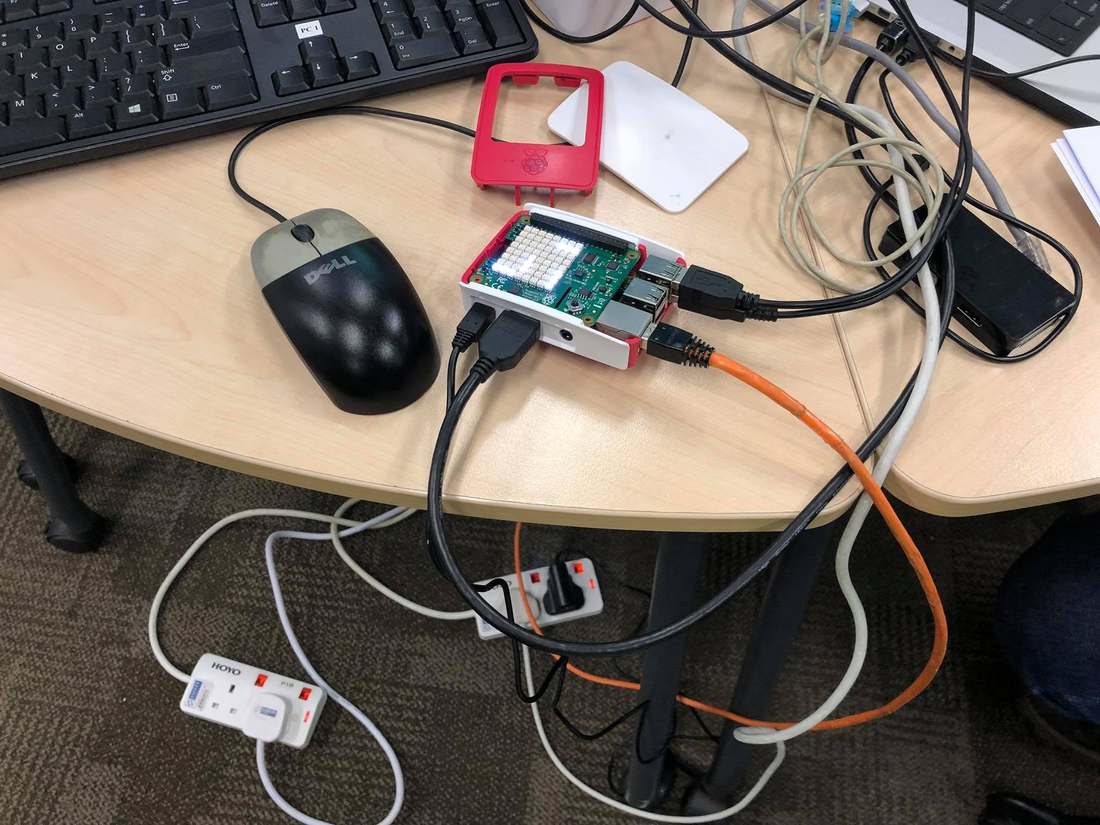
There is a specific moment in every hardware class when the abstraction disappears. It arrives when someone connects the last jumper wire, the board powers up, and a number that means something in the real world appears on their screen. That is the moment IoT stops being a buzzword.
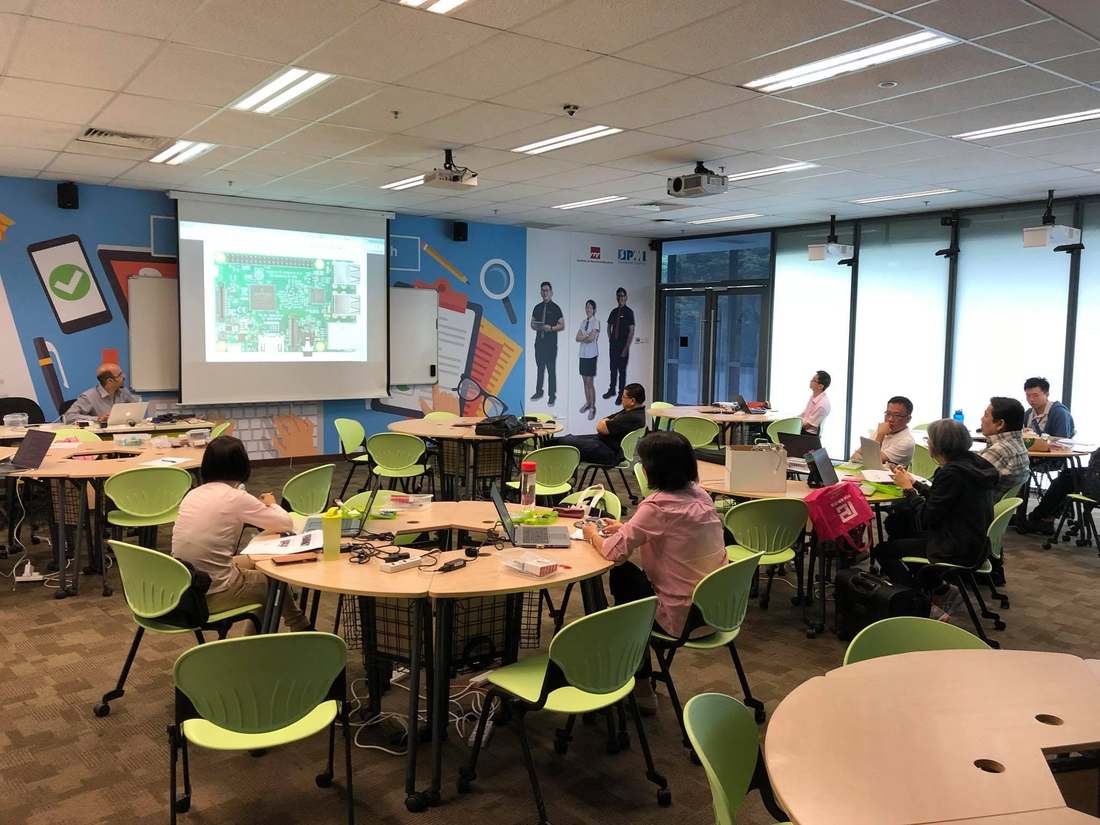
Mr Reza's approach was to explain the hardware before touching it. Which pins carry power, which carry data, what a pull-up resistor is actually for, and why the difference between 3.3V and 5V logic matters more than beginners expect. Groups that skip this step spend the afternoon debugging wiring instead of building systems.
Getting data to the cloud
A sensor reading that stays on the device is a thermometer. The IoT part begins when that reading travels — and the class covers the two protocols that carry the overwhelming majority of real IoT traffic:
- MQTT, a lightweight publish-subscribe protocol designed for constrained devices and unreliable networks. A device publishes to a topic; anything subscribed to that topic receives it. Minimal overhead, which matters when you are running on battery.
- REST APIs over HTTP, the familiar request-response approach. Heavier per message, but it speaks the same language as every web service you already use.
The class also runs the loop in reverse: reading data back down from the cloud to remotely control a device. That is the step that turns a monitoring project into an automation project, and it is where most participants start thinking seriously about applications at work.
Building the flow
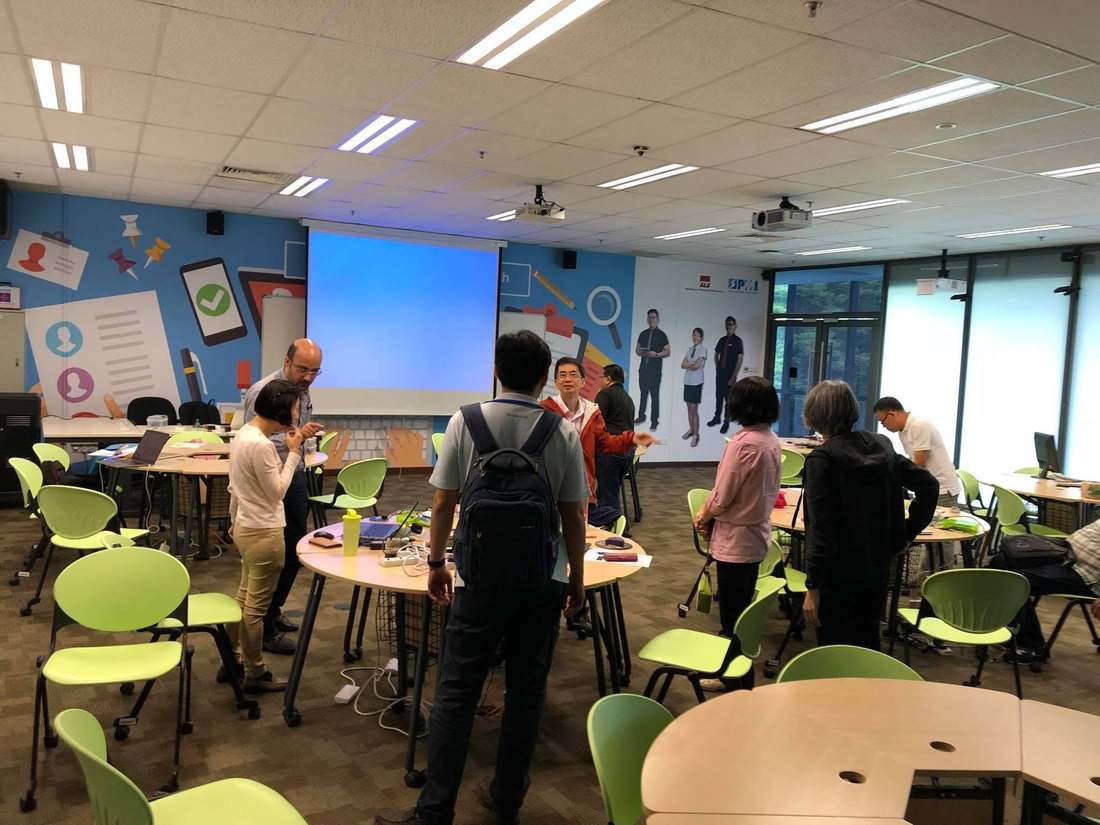
Look at the screen in the class photo at the top of this post and you will see a Node-RED flow — nodes wired together into a pipeline that takes a sensor reading, processes it, and pushes it out to a gauge and a chart. Visual flow-based tools like this are why IoT prototyping has become accessible to people who do not write code daily. You reason about data movement rather than syntax.
Once data is flowing, the last piece is making it mean something: analysing and visualising it on the cloud. A chart of one afternoon's readings is a curiosity. The same chart over a month shows you the pattern — the daily cycle, the anomaly at 3am, the slow drift that indicates something needs attention. That is where IoT turns into business insight.
The course today
The class our ITE colleagues took in 2018 has since become WSQ - Internet of Things (IoT) Fundamental for Beginners (course code TGS-2020504020), a 2-day, 16-hour programme at Beginner level with a 2-hour assessment, now held at Woods Square Tower 1, Woodlands. It maps to the SkillsFuture Skills Framework TSC Internet of Things Application (PTP-TEM-3002-1.1), with four learning outcomes:
- Understand the uses and functions of IoT technologies
- Post sensor data to cloud for IoT review
- Control devices from cloud data sources
- Data analytics and visualisation on cloud to gain business insight
The syllabus runs from IoT fundamentals — sensors, actuators and wireless communication technologies — through collecting and posting data to the cloud with MQTT and REST APIs, reading data back and remotely controlling devices, and finishing with IoT data analytics, visualisation and security.
What it costs
The full fee is $750 before GST. With WSQ funding:
| Who you are | Nett fee | Funding |
|---|---|---|
| Singapore Citizen / PR, aged 21 and above | $442.50 | 50% course-fee funding |
| Singapore Citizen aged 40 and above (MCES), or SME-sponsored | $292.50 | 70% course-fee funding |
GST of $67.50 (9%) applies to the full course fee. Funding is valid from 20 May 2020 to 19 May 2028. Eligible Singapore Citizens can apply SkillsFuture Credit and PSEA against the nett fee, NTUC members may claim UTAP, and employers can tap SFEC with Absentee Payroll support. Completion — at least 75% attendance plus a pass in the assessment — earns a Certificate of Achievement from Tertiary Infotech Academy and an OpenCert (Statement of Achievement) from SkillsFuture Singapore.
Check the next class date and funding eligibility →
Frequently asked questions
Do I need an electronics or programming background?
No. The course is pitched at Beginner level and starts from what a sensor is and how a board is wired. Flow-based tools let you build working IoT pipelines by connecting nodes rather than writing code, so basic computer literacy is enough to complete every hands-on exercise.
What is the difference between MQTT and a REST API for IoT?
MQTT is a lightweight publish-subscribe protocol built for small devices and patchy networks — a device publishes to a topic and subscribers receive it, with very little overhead. REST over HTTP is request-response and more familiar to web developers, but heavier per message. The course covers posting and reading data with both.
Can this course be run for my organisation on-site?
Yes. The 3 January 2018 class described here was delivered on-site at ITE College West for their staff. We run corporate and institutional classes at your premises with the content adjusted to your context — get in touch through the course page to discuss a group booking.
What can I actually build after two days?
A complete working loop: a sensor collecting real measurements, that data posted to a cloud service, a dashboard charting it, and remote control sending commands back down to the device. That covers the full IoT pattern, and it scales from one sensor to many without changing concepts.
What funding can I use for the course fee?
The course is WSQ funded: 50% course-fee funding for Singapore Citizens and PRs aged 21 and above, and 70% for Singapore Citizens aged 40 and above (MCES) or SME-sponsored staff. Eligible learners can offset the nett fee with SkillsFuture Credit or PSEA, NTUC members can claim UTAP, and companies can tap SFEC with Absentee Payroll support.
Where to go next
The ITE staff in that iROOM left with something more portable than a certificate: the understanding that a sensor, a network and a cloud endpoint are enough to make almost anything measurable.
- Pick one thing around you that nobody currently measures — a room, a machine, a tank. That is your first IoT project.
- Join the next WSQ - Internet of Things (IoT) Fundamental for Beginners class — from $292.50 nett for eligible Singapore Citizens aged 40 and above — and build the full sensor-to-cloud loop in two days.
- Keep the board after the class and rebuild the project on your own network. The second build is where the learning consolidates.