You have no items in your shopping cart.
Blog / Why Learn RPA? Inside Our 11 February 2020 Robotic Process Automation Class
Why Learn RPA? Inside Our 11 February 2020 Robotic Process Automation Class
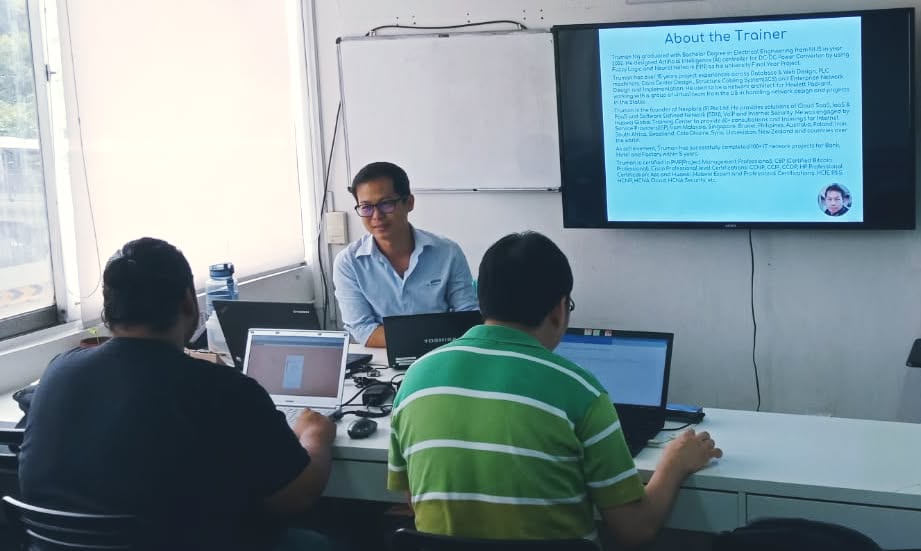
On 11 February 2020, a small group of learners sat down with their laptops at our old premises at Bukit Timah Shopping Centre for our Robotic Process Automation (RPA) for Beginners class — and by the end of the first morning, each of them had a software robot doing real work on their own machine. Leading the class was Mr Truman Ng, an experienced trainer in networking and RPA. No robotics lab, no code-heavy prerequisites: just UiPath Studio, a repetitive task, and the mildly unsettling experience of watching your computer drive itself.
What RPA actually is
Robotic Process Automation is software that operates other software the way a person does — clicking buttons, reading screens, typing into fields, moving data between applications. The "robot" is a program that follows a workflow you design, driving the same user interfaces your team already uses.
That last part is the quiet genius of RPA. It needs no APIs, no system integration project, and no changes to the applications it automates. If a task can be written down as rules — open this report, copy these fields, paste them into that system, email the result — a robot can do it, and it will do it the same way every single time.
The case for RPA: why businesses keep adopting it
The pitch our learners heard in that 2020 classroom has only strengthened since. The benefits stack up in a way few technologies manage:
- Hours back, every week. Repetitive tasks that consume a person's afternoon — report pulls, data entry, reconciliations, form filling — run in minutes, and a robot works nights and weekends without overtime.
- Accuracy you can bank on. A human keying data across a hundred rows will slip eventually; a robot executes the same steps identically on row one and row ten thousand. Fewer errors means less rework and less checking of the checking.
- Fast, measurable returns. Because RPA sits on top of existing systems, a first automation is often live in days. You are not waiting a year on an IT roadmap to see payback.
- Non-invasive by design. The robot uses the same screens your staff do, so legacy systems that will never get an API — and there are many in every industry — are suddenly automatable.
- Scales on demand. Month-end spike? Run more robots. Quiet week? Run fewer. Capacity stops being a hiring question.
- A built-in audit trail. Every action a robot takes is logged, which compliance teams tend to like considerably more than a shared spreadsheet of who-did-what.
- Happier people. Nobody joined your company to copy numbers between windows. Offloading the drudge work to robots frees people for the judgement, service and analysis work that actually needs a human.
This is why RPA shows up everywhere from banks and insurers to logistics, healthcare and HR shared-service centres — anywhere rule-based digital paperwork piles up.
What a beginner actually builds
The class works in UiPath, one of the most widely deployed RPA platforms, and the progression is deliberately hands-on. Learners assemble workflows in UiPath Studio — sequences and flowcharts, variables, if-else branches and loops — then point them at real applications: scraping data from websites, recording UI actions and replaying them, and wiring several steps into a fully functional robot.
The consistent surprise is how quickly it clicks. RPA workflows are built visually, by arranging activities on a canvas rather than writing pages of code, so the programming concepts arrive gently and in context. Watching your first robot log into a site, harvest a table and file the results — unattended — is the moment most learners start listing every task at work they intend to automate next.
The course today
Our current CASL - Robotics Process Automation (RPA) for Beginners course (course code TGS-2026064721) has grown into a 2-day, 16-hour programme at Beginner level with a 2-hour assessment, held at Woods Square Tower 1, Woodlands — five minutes from Woodlands MRT. It maps to the SkillsFuture Skills Framework TSC Self-Learning Systems (ICT-DIT-4028-1.1), and by the end of it learners can determine RPA best practices, build fully functional robots, design and validate automation processes, debug workflows, and deploy and optimise RPA.
The syllabus runs from RPA fundamentals and UiPath Studio through workflows, variables and control flow, website scraping, recording and UI automation, debugging and exception handling, to managing and deploying bots with UiPath Orchestrator.
What it costs
The full fee is $750 before GST. With CASL funding:
| Who you are | Nett fee | Funding |
|---|---|---|
| Singapore Citizen / PR, aged 21 and above | $442.50 | 50% course-fee funding |
| Singapore Citizen aged 40 and above (MCES), or SME-sponsored | $292.50 | 70% course-fee funding |
GST of $67.50 (9%) applies to the full course fee. Funding is valid from 20 July 2026 to 19 July 2028. Eligible Singapore Citizens can apply SkillsFuture Credit and PSEA against the nett fee, NTUC members may claim UTAP, and employers can tap SFEC with Absentee Payroll support. Completing the course — at least 75% attendance plus a pass in the assessment — earns a Certificate of Achievement from Tertiary Infotech Academy.
Check the next class date and funding eligibility →
Frequently asked questions
Do I need a programming background to learn RPA?
No. RPA workflows are assembled visually in UiPath Studio by arranging activities on a canvas. Programming concepts such as variables, conditions and loops are introduced through the workflows themselves, so basic computer literacy is enough to start building working robots on day one.
What is UiPath, and why does the course use it?
UiPath is one of the most widely deployed RPA platforms worldwide, with a free Community Edition you can install on your own machine and keep practising with after the class. Skills learned in UiPath — workflow design, selectors, debugging, orchestration — transfer readily to other RPA tools.
Is RPA still worth learning now that AI is everywhere?
Yes — the two are converging, not competing. Modern automation pairs RPA robots with AI for document reading, decision-making and language tasks, an approach often called intelligent process automation. The workflow, debugging and deployment skills this course teaches are the foundation that the AI layer sits on.
Who typically takes this course?
Operations and finance staff who live inside repetitive processes, analysts who want their reports to assemble themselves, IT professionals adding automation to their toolkit, and career switchers heading toward automation developer roles. The course assumes no RPA experience.
What funding can I use for the course fee?
The course is CASL funded: 50% course-fee funding for Singapore Citizens and PRs aged 21 and above, and 70% for Singapore Citizens aged 40 and above (MCES) or SME-sponsored staff. Eligible learners can offset the nett fee with SkillsFuture Credit or PSEA, NTUC members can claim UTAP, and companies can tap SFEC with Absentee Payroll support.
Where to go next
Every organisation has a queue of repetitive digital work nobody enjoys doing. The learners in our 11 February 2020 class left with the one skill that turns that queue into a to-automate list — and the field has only grown since.
- Pick one repetitive task you do every week and write down its steps as rules. If you can write it down, a robot can do it.
- Join the next CASL - Robotics Process Automation (RPA) for Beginners class — from $292.50 nett for eligible Singapore Citizens aged 40 and above — and build your first working robots in two days.
- Install the free UiPath Community Edition after the class and automate that task for real.