You have no items in your shopping cart.
Course Details
Course Details
What You'll Learn
Topic 1: Introduction to Deep Learning
- Machine Learning vs Deep Learning
- Deep Learning Methodology
- Overview of Tensorflow and Keras
- Install and Run Keras
Topic 2: Introduction to Neural Network
- What is Neural Network (NN)?
- Loss Function and Optimizer
- Build a Neural Network Model for Regression
Topic 3: Classification Model with Neural Network
- One Hot Encoding and SoftMax
- Cross Entropy Loss Function
- Build a Neural Network Model for Classification
Topic 4: Convolutional Neural Network (CNN)
- Introduction to Convolutional Neural Network?
- ImageDataGenerator
- Image Classification Model with CNN
- Data Augmentation and Dropout
Topic 5: Transfer Learning
- Introduction to Transfer Learning
- Applications of Pre-Trained Models
- Fine Tuning Pre-Trained Models
Assessment
- Written Exam
- Practical Exam
- Oral Questioning
Course Info
Promotion Code
Promo or discount cannot be applied to WSQ courses
Minimum Entry Requirement
Knowledge and Skills
- Able to operate using computer functions with minimum Computer Literacy Level 2 based on ICAS Computer Skills Assessment Framework
- Minimum 3 GCE ‘O’ Levels Passes including English or WPL Level 5 (Average of Reading, Listening, Speaking & Writing Scores)
Attitude
- Positive Learning Attitude
- Enthusiastic Learner
Experience
- Minimum of 1 year of working experience.
- Minimum 18 years old
Minimum Software/Hardware Requirement
Software:
You can download and install the following software:
Hardware: Windows and Mac Laptops
About Progressive Wage Model (PWM)
The Progressive Wage Model (PWM) helps to increase wages of workers through upgrading skills and improving productivity.
Employers must ensure that their Singapore citizen and PR workers meet the PWM training requirements of attaining at least 1 Workforce Skills Qualification (WSQ) Statement of Attainment, out of the list of approved WSQ training modules.
For more information on PWM, please visit MOM site.
Funding Eligility Criteria
| Individual Sponsored Trainee | Employer Sponsored Trainee |
|
|
|
SkillsFuture Credit:
PSEA:
|
Absentee Payroll (AP) Funding:
SFEC:
|
Steps to Apply Skills Future Claim
- The staff will send you an invoice with the fee breakdown.
- Login to the MySkillsFuture portal, select the course you’re enrolling on and enter the course date and schedule.
- Enter the course fee payable by you (including GST) and enter the amount of credit to claim.
- Upload your invoice and click ‘Submit’
SkillsFuture Level-Up Program
The SkillsFuture Level-Up Programme provides greater structural support for mid-career Singaporeans aged 40 years and above to pursue a substantive skills reboot and stay relevant in a changing economy. For more information, visit SkillsFuture Level-Up Programme
Get Additional Course Fee Support Up to $500 under UTAP
The Union Training Assistance Programme (UTAP) is a training benefit provided to NTUC Union Members with an objective of encouraging them to upgrade with skills training. It is provided to minimize the training cost. If you are a NTUC Union Member then you can get 50% funding (capped at $500 per year) under Union Training Assistance Programme (UTAP).
For more information visit NTUC U Portal – Union Training Assistance Program (UTAP)
Steps to Apply UTAP
- Log in to your U Portal account to submit your UTAP application upon completion of the course.
Note
- SWDA subsidy is available for Singapore Citizens, Permanent Residents, and Corporates.
- All Singaporeans aged 25 and above can use their SkillsFuture Credit to pay. For more details, visit www.skillsfuture.gov.sg/credit
- An unfunded course fee can be claimed via SkillsFuture Credit or paid in cash.
- UTAP funding for NTUC Union Members is capped at $250 for 39 years and below and at $500 for 40 years and above.
- UTAP support amount will be paid to training provider first and claimed after end of class by learner.
Appeal Process
- The candidate has the right to disagree with the assessment decision made by the assessor.
- When giving feedback to the candidate, the assessor must check with the candidate if he agrees with the assessment outcome.
- If the candidate agrees with the assessment outcome, the assessor & the candidate must sign the Assessment Summary Record.
- If the candidate disagrees with the assessment outcome, he/she should not sign in the Assessment Summary Record.
- If the candidate intends to appeal the decision, he/she should first discuss the matter with the assessor/assessment manager.
- If the candidate is still not satisfied with the decision, the candidate must notify the assessor of the decision to appeal. The assessor will reflect the candidate’s intention in the Feedback Section of the Assessment Summary Record.
- The assessor will notify the assessor manager about the candidate’s intention to lodge an appeal.
- The candidate must lodge the appeal within 7 days, giving reasons for appeal
- The assessor can help the candidate with writing and lodging the appeal.
- he assessment manager will collect information from the candidate & assessor and give a final decision.
- A record of the appeal and any subsequent actions and findings will be made.
- An Assessment Appeal Panel will be formed to review and give a decision.
- The outcome of the appeal will be made known to the candidate within 2 weeks from the date the appeal was lodged.
- The decision of the Assessment Appeal Panel is final and no further appeal will be entertained.
- Please click the link below to fill up the Candidates Appeal Form.
Job Roles
Job Roles
- Machine Learning Engineer
- Data Scientist
- Deep Learning Researcher
- AI Developer
- Neural Network Designer
- Computer Vision Engineer
- NLP Engineer (branching into deep learning)
- AI Product Manager (technical understanding)
- Robotics Engineer (with AI components)
- Bioinformatics Scientist (deep learning applications)
- Medical Imaging Specialist (AI-focused)
- Game Developer (AI-driven features)
- Predictive Analytics Specialist
- AI/ML Educator or Trainer
- Autonomous Systems Developer.
Trainers
Trainers
CY Quah is an ACLP-certified trainer and data science professional with extensive experience in Python, NLP, and machine learning. He has led AI training programs for SAP, Temasek Polytechnic, and IMDA under the SGUnited Mid-Career Pathways initiative, and has delivered corporate workshops on text analytics, recommender systems, and chatbot development. His expertise includes applying NLP tools such as NLTK, spaCy, and Gensim for sentiment analysis, topic modeling, and text classification.
Dr Alvin Ang holds a Ph.D. in Operations Research from Nanyang Technological University and brings extensive academic and industry expertise in machine learning, AI, and optimization.He has taught at NTU, SUSS, Curtin University, and SP Jain School of Global Management, as well as in professional training roles with IBM and Tertiary Infotech. An ACLP-certified trainer, Dr Ang has earned multiple IBM certifications in machine learning, deep learning, and TensorFlow, which he integrates into his course delivery.
With over a decade of teaching experience, Dr Ang emphasizes hands-on application of Python and TensorFlow for machine learning model development. Learners benefit from his structured approach, starting with supervised learning concepts before progressing to building and training neural networks. His teaching style blends theory with practical coding exercises, ensuring participants gain the skills needed to design, evaluate, and deploy their own machine learning models.
Solomon Soh is an experienced data scientist and AI trainer who has applied machine learning and deep learning in areas such as natural language processing, computer vision, and optimization. At IBM Singapore, he supervised more than 20 machine learning and deep learning projects, coaching teams on model design, data preprocessing, and deployment. His career includes data science roles at Workforce Optimizer and Certis Cisco, where he implemented forecasting, reinforcement learning, and predictive analytics solutions using TensorFlow and scikit-learn.
Certified in AI engineering and machine learning, Solomon has also served as lead instructor for data science bootcamps and corporate training programs. He specializes in guiding learners through their first steps in TensorFlow, helping them build, train, and evaluate neural network models. His teaching emphasizes hands-on coding, best practices in model development, and real-world case applications, equipping participants with the confidence to apply machine learning effectively.
Terence Ee is an experienced IT leader and consultant with more than 25 years of expertise in technology management, information systems, and digital transformation. He has served as Chief Information Officer at the Supreme Court of Singapore and Vice President of Information Systems at Senoko Energy, where he led major IT modernization projects. Since 2017, he has worked as an independent consultant and ACLP-certified trainer, specializing in guiding SMEs and enterprises in adopting future-ready digital platforms.
As a WSQ-accredited trainer, Terence delivers programs in digital collaboration, IT governance, and productivity tools. His facilitation emphasizes case studies, simulations, and hands-on practice, enabling learners to apply modern IT systems such as Microsoft 365 and Google Workspace to improve collaboration and business efficiency. With his leadership background and deep IT expertise, Terence prepares learners to thrive in digitally transforming environments.
Review
Customer Reviews (9)
- will recommend Review by Course Participant/Trainee
-
. (Posted on 10/24/2021)1. Do you find the course meet your expectation? 2. Do you find the trainer knowledgeable in this subject? 3. How do you find the training environment - might recommend Review by Course Participant/Trainee
-
Provide more practical examples of deep learning and provide real questions and solutions of deep learning in industry (Posted on 10/9/2020)1. Do you find the course meet your expectation? 2. Do you find the trainer knowledgeable in this subject? 3. How do you find the training environment - will recommend Review by Course Participant/Trainee
-
Expect Advanced Deep Learning With TensorFlow Keras in future1. Do you find the course meet your expectation? 2. Do you find the trainer knowledgeable in this subject? 3. How do you find the training environment
Hats off (Posted on 9/16/2020) - will recommend Review by Course Participant/Trainee
-
More explanatory notes to the python codes. Provides codes and examples for other possible prediction context,not just images. (Posted on 3/6/2020)1. Do you find the course meet your expectation? 2. Do you find the trainer knowledgeable in this subject? 3. How do you find the training environment
Write Your Own Review
- Recommended Courses
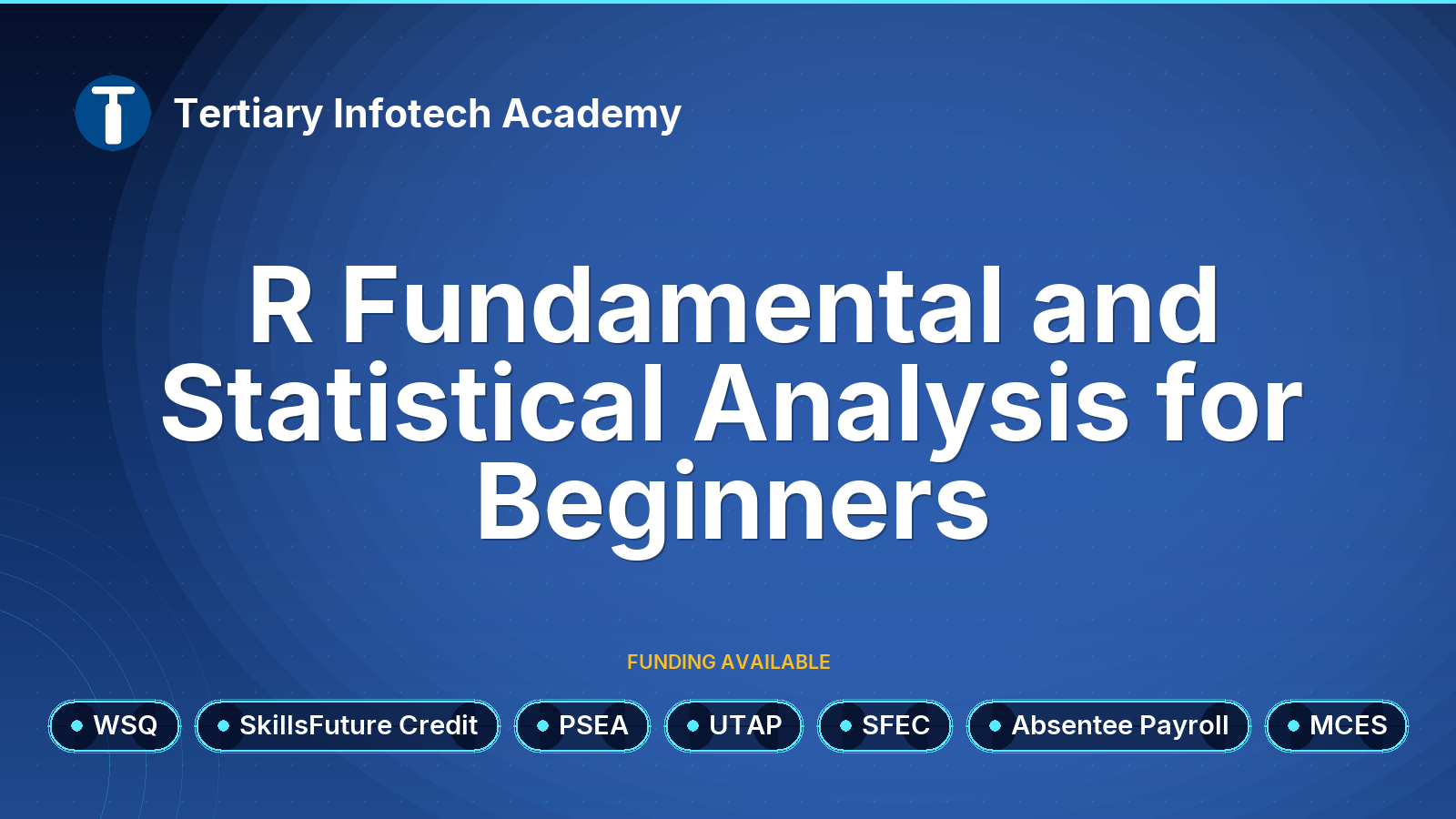
WSQ - R Fundamental and Statistical Analysis for Beginners
$750.00 (GST-exclusive)
$817.50
(GST-inclusive)
WSQ - Basic Machine Learning with ScikitLearn Course
$750.00 (GST-exclusive)
$817.50
(GST-inclusive)
WSQ - Data Mining and Machine Learning Fundamentals for Beginners
$750.00 (GST-exclusive)
$817.50
(GST-inclusive)